

This week’s reflection is based on the gospel reading from the lectionary texts, which you can find here.
I confess that this week I had to make a considerable effort to approach this story expecting to hear something new. I know I advocate for this approach a lot, but I acknowledge that it still takes effort even when I am deeply committed to the principles behind it.
Firstly, I hope and trust that I’m not the same person who read this story when it came up in the lectionary cycle three years ago – I trust that I have learned something and let some things go; I trust that I have grown a little bit wiser, a little bit gentler. Secondly, I firmly believe that the Spirit of the living God speaks in new ways through these ancient words every single time. And so I believe that there isn’t – there can’t be – one right way, one meaning, one application for any of these texts.
Instead of meaning and application, the scriptures offer a meeting place where we can attend to who we are and how we are in relationship with the God of love.
To help me find something fresh, I focused in turn on each of the three main actors in the story.
First of all, I considered the people. The crowds. They may or may not have known that Jesus and John the Baptist, who had just been beheaded, were cousins. So they may or may not have known that Jesus, on hearing the news of John’s death, and heading out into the wilds, was perhaps seeking a place of quiet, perhaps wanting a wilderness space for his grief and for prayer. The crowds see Jesus taking off and they follow him.
I paused to wonder…does my desire to follow Jesus and to be with him…does that lead me into deserted places? Does yours?
If not, would your needs drive you out there? Because the story says that Jesus healed the sick among these crowds who followed him, which tells us that people walked out into the deserted places, taking sick people with them…can you imagine??
I paused to consider the many kinds of reasons why they – and I – might chose to stay home instead. Apart from the inconvenience of schlepping all the way out into the wilderness, I can imagine…apathy might keep me at home –What’s the point…., fear might talk me out of risking that trip … distrust, busyness, exhaustion… what could you identify as some of the things that hold you back?
Still, five thousand, plus uncounted women and children had the will and the energy for it though.
They wanted to be with Jesus and so they followed him. And I guess that they wanted something from Jesus – healing and also hope. Hope that things can change. Hope that there is something happening, that God is at work, that the future holds something different from the past….I can definitely relate to that, can you?
After the crowds, I considered Jesus’ part in this story. He looked for a quiet place, but the hopeful and needy crowd evoked his compassion. He went from seeking space to full and deep engagement, and he works into the evening, meeting, listening, talking, teaching, healing.
I have to admit that the mum/leader in me wonders how he could have paid so little attention to the practicalities of food, shelter and timing. Did he leave it to others to sort those out? It doesn’t seem very responsible. Everyone can see the shadows are lengthening and evening is coming…he could have sent the crowd away in good time so they could be home for dinner. Instead, he works until the light goes, and then the disciples point out the obvious.
Which brings me to the disciples as the third main actors in the story. I imagine that they are grieved at the news about John the Baptist, and also shocked, scared and worried. Is Jesus safe? Are they safe? I expect that they wanted to have some time to figure out their next move, to discuss the implications for Jesus and to come up with some plans. Instead, they are plunged into…well, actually, when I thought about it, I wondered what they were doing while Jesus was healing the sick. Were they watching and listening as he talked and touched? Were they organising people into groups…lame over here; blind there; demon possessed a bit further away…?
Were they doing follow up pastoral care with people or leading small group discussions or even taking the opportunity to have that conversation among themselves about how they would manage things to keep Jesus safe? Matthew doesn’t say anything about this, however, he just tells us that at the end of the day, the disciples are done and they want to crowd to go on home.
And Jesus lands them with an unexpected responsibility. Feeding the people is their problem. And it’s too much. They are tired and hungry too. They are likely worried if not scared and angry and who knows what else. They have given all they can already. Plus, see my earlier comment about everyone can see the shadows lengthening.
They look at what they have left among them, and it is clearly not enough. Barely worth mentioning. It’s embarrassingly meagre.
As I reflected on this story and our story, it seemed to me that the loaves and fish that the disciples rustle together and offer is kind of symbolic. The ‘all we have’ is not just about the food. It’s also about the situation and how it feels. The task Jesus has given is too big for us. The needs are too great and we’ve already had a long day and worked hard and there are so many different things that need attention, that we can’t tell where we should begin.
Plus, it seems a bit hopeless.
Through a series of events, we find ourselves in a place where what resources we have left among us are not enough for the task in front of us. In the story, the disciples bring their meagre offering to Jesus and with a blessing, he breaks and multiplies it…. and all the disciples need to do is distribute.
It’s my guess that as they did so, they too, felt the blessing breaking them open and creating more within them.
So, I think, maybe it’s better when we know we can’t be disciples, we can’t follow in Jesus’ way to live and give, love and bless out of our own resources, or in our own strength. I think it’s better when we recognise that we need God to work with the little we have, and we need to let God bless us as we share and distribute the goodness of grace.
The blessing begins when, in response to Jesus’ question: ‘what do you have?’ we gather all our resources and offer them to him.
With the disciples, we can say, ‘this is all; that’s the lot’. And then we trust that Jesus will bless and surprise us. So, I guess we need to take a reckoning. What do we have? What do you have to put in the kitty to be blessed?
While you consider that, I was talking with a chaplain recently who is reaching gold card age. She’s been a missionary and involved in church planting and pastoral care all her working life, and she noticed people have begun asking what she plans to do when she retires. She wasn’t sure she understood the question.
She said, “I’ve always done what I sensed God was calling me to do. Why do people think that would change when I turn 65? I am confident that God is aware of what I can and can’t do and will adjust my calling appropriately.”…..
So, what do we have? Now? Could we list what we have now -our equivalent of the loaves and fish – without any sense of judgement or grief or fear or shame? Without regret for what we used to have and have no longer? What we have now is also in part about what you have, now, and what we have depends on whether, whatever it is you have, you are willing to put it in the kitty to be blessed and shared. Because it takes teamwork to make the dream work…it takes a team to keep and grow a church.
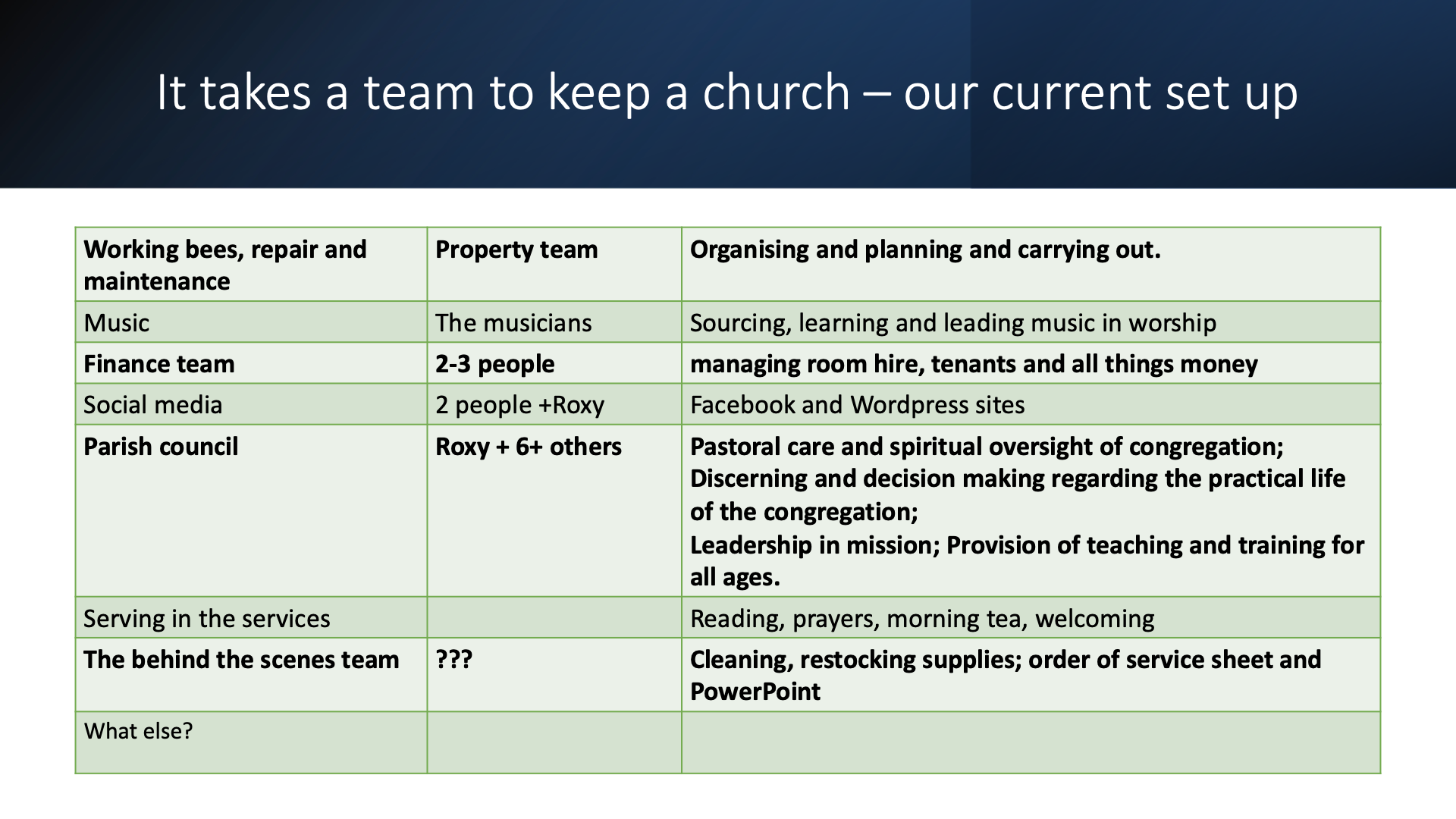
Here’s how much we already do to keep the church

And I’m sure there’s more that I haven’t listed. Some of you may be feeling the weight of uneven distribution of responsibility, too. It can be hard not to keep stepping in when you know something needs to be done and end up carrying more than you are called to do.
Here’s what we are talking about at parish council to grow the church in the next 12 months
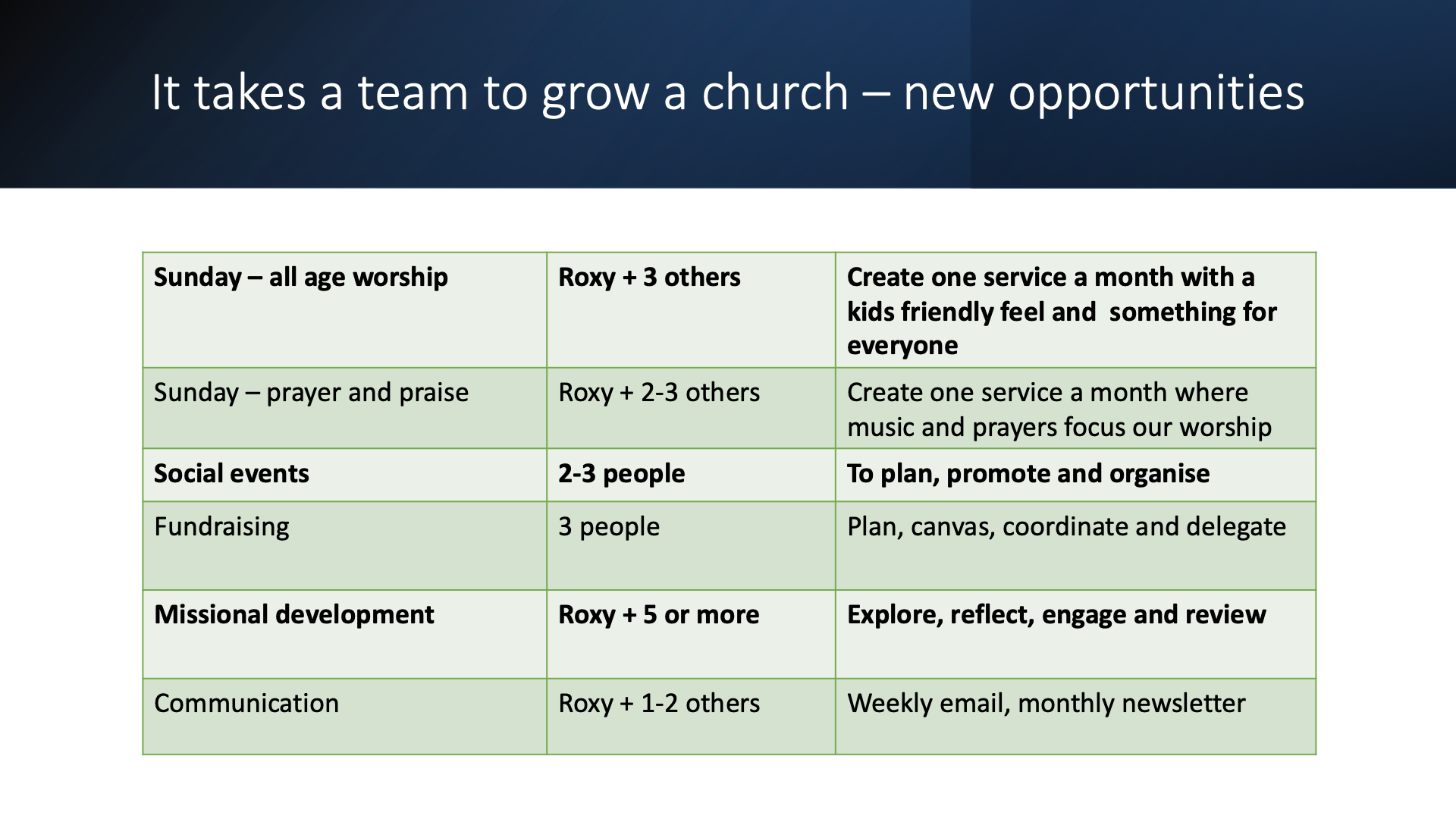
What is God calling you to offer?
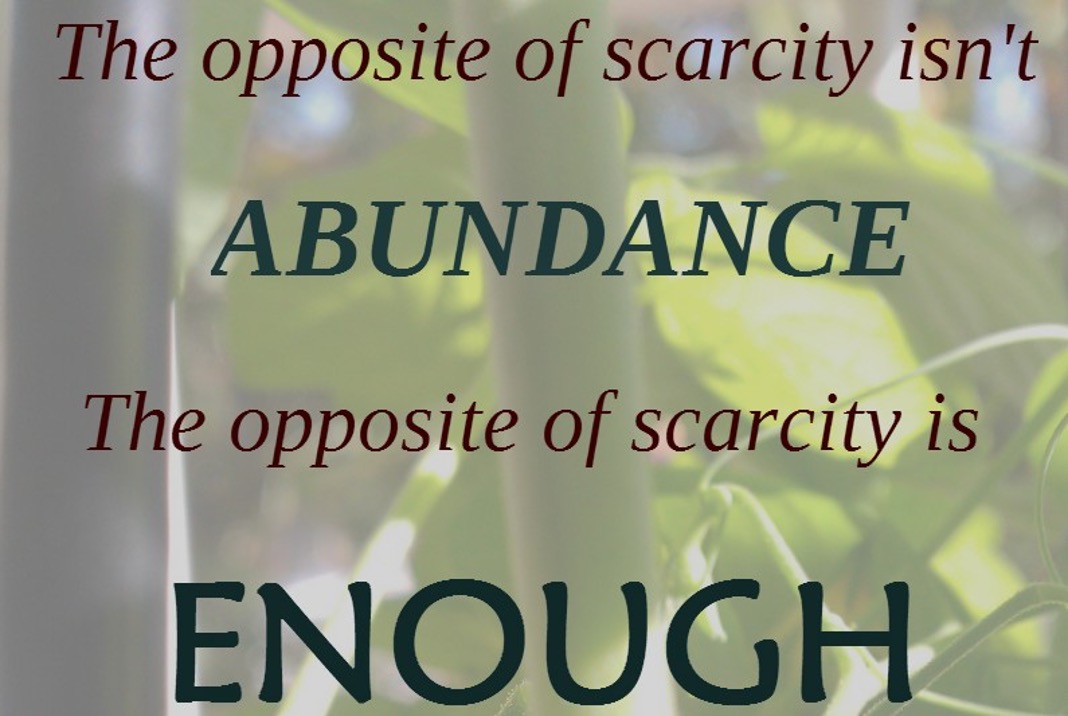
The gospel story ends with a whole heap of leftovers – 12 baskets, one for each of the tribes of Israel. On the one hand, that’s an abundance. On the other, that’s one each.
That’s enough.
And we’re enough. Our meagre offering is enough. Let’s let God bless it and see what happens next.

