
The readings for this week’s sermon can be found here.
The lectionary reading from the Hebrew Scriptures last week was the story of how Rebekah came to be married to Isaac. This week that story continues into what’s known as the Jacob cycle. Rebekah eventually conceives twins who, even before they are born, appear to be jostling each other for space. So, the two boys are getting in each other’s way from the start.
Then they grow up with very different interests and with a lopsided relationship to their parents, and that leads to all kinds of mess and pain.
I wonder if you remember that three years ago, when this story came up in the lectionary cycle, I talked about the Karpman Drama Triangle. This describes a relationship dynamic which begins when there’s an uncomfortable level of tension between two people.
So, for example, two children are playing together and then one of them breaks the rules of the game in some way. The offended child might attempt to negotiate with words. They might negotiate with force. Usually they don’t have the skills to work out how to mend the break and eventually one of them will call out for back up.
MUM! He took the….she won’t let me….it’s my turn…
Then the well rested, unhurried and compassionate parent enters the tension and manages to stay neutral and calm while sorting out what happened and helps both children to release the tension and return to ease.
I don’t know about you, but that wasn’t what happened when I fought with my brothers. And for most of us who grew up before parenting was a verb, we didn’t learn any of the skills that help us:
- To ask for what we need clearly and directly,
- to tell our side of the story without blaming and shaming,
- to listen patiently and compassionately to our rival’s side,
- to accept responsibility for our reactions, our thoughts and feelings,
- to allow that there may be a bigger picture,
- to trust that fair and equal might not be the same,
- to trust that you will get what you need.
Jacob and Esau’s relationship is not a good model for us to learn from. Rebekah and Isaac also, not good models. The bible doesn’t tell us these stories so we can copy them or use them as a template – although for several generations our approach to scripture has been to see it as exactly that kind of moral compass.
We were taught to read the bible to find the teaching which we could apply to our own lives so that we ‘are good and do good’, with the general understanding that our religious life was supposed to make us happier and the world better.
But here’s the thing: this approach to the bible puts us into a social contract not a loving relationship.
The contract looks something like this: I will try to be good. If I am good, God owes me happiness in return.
Most of us wouldn’t say it like that, but that’s actually what it boils down to.
This moral compass approach to scripture tells us God is good, and the contract of faithful application of scriptural lessons implies goodness prevents hard, sad and painful things happening to good people. So we end up doing little more than trying to manage our outward behaviours to avoid doing things on the ‘bad’ list that God doesn’t like and do more of the things on the ‘good’ list that make God happy.
This is not transformational, liberating or life giving. It’s exhausting.
When the goal of faith is to be more good and less bad, we end up not being able to take in the fullness of the people whose stories are told in scripture. We somehow brush past Abraham’s treatment of Hagar and the horror of the knife over Isaac’s throat. We discount Jacob’s brushing off his brother’s hospitality at their so-called reconciliation. We reframe David’s predatory advances to Bathsheba, telling the story like she’s bathing on the rooftop when it’s David who is on the roof, spying on her. We probably never even noticed Moses’ abandonment of his wife and children.
The so-called heroes of faith are all flawed and wounded humans who sometimes have great skill, sometimes trust God fully, sometimes act wisely. They offer us hope because they mess up quite a bit as well.
They offer us hope because God works through the whole pattern of their life, not just the moments when they are in tune and obedient and faithful, but also the majority of the time when they are mostly selfish, scared and scheming. They offer us hope not because they were super saintly and heroic, but because they are no better qualified for God to love them and be with them than we are. And they offer us hope because through these stories we have a chance to get to know who God is, to hear how God draws near, walks alongside, loves alongside, grieves alongside, heals and guides and nourishes us alongside us.
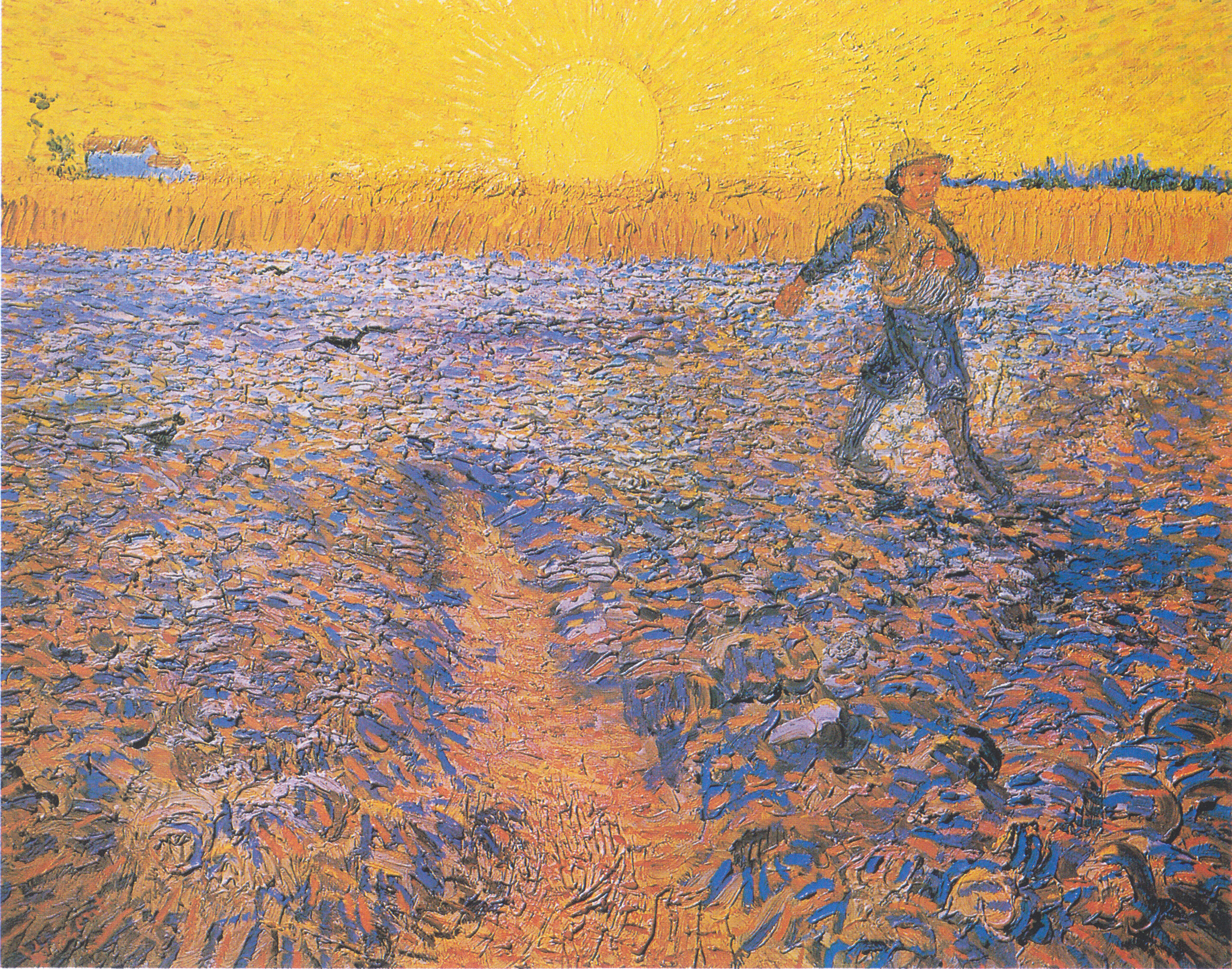
Because Jesus is our model of faith and life. Jesus who told this parable of the sower who is out in the midst of all the soil spaces, scattering seeds and knowing that some of it will grow and flourish and fruit. There will be fruit.
So if, like me, you didn’t learn in your family how to speak your truth with compassion and how to listen with an open heart to another speak their truth; if you didn’t learn how to accept responsibility for your reactions, or how to ask for what you need directly; if no one showed you how to mend trust when it was broken or how to offer an honest and heartfelt apology, let me say this: It is never too late to learn.
We want to be the good soil in the parable, don’t we? We want that to be us. But good soil doesn’t just happen. It takes work. There’s rocks to shift and manure to add and weeds to pull and all kinds of work that goes in to make it ready.
So what do you need to do first in order to be good soil?
- Do you need to unlearn trying to be good and learn instead to know the God who loves you?
- Do you need to learn how to take responsibility for your actions and reactions so you aren’t looking for someone else to blame?
- Do you need to learn how to offer a real apology?
- Do you need to learn how to ask for what you need?
- Or how to say no?
- Or how to make amends?
- How to repair trust?
Because the fruit of faith is a life rich in love, peace, joy and hope. It’s a life of fullness – not devoid of pain and sadness, not empty of struggle and disappointment, not lacking discomfort and tension and yes, at times, even conflict.
So, Matariki has three aspects.
We have honoured those we have lost this past year.
We have given thanks for who and what we have here now.
As we look ahead to the coming year…I invite you to plant a seed and place it on one of these areas where you want to grow.

