
You can find the lectionary readings for this reflection here. We heard the reading from Acts 2 and from John, but I also reference the Genesis story.
We’ve been leading up to the events of the Day of Pentecost for the last seven weeks, since Easter Sunday, fifty days ago. This reading from Acts today is the unspoken background for all the other readings in those weeks after Easter, where we heard about Saul/Paul and Ananias, and Peter with Tabitha, Lydia and Cornelius. These are some of the many stories of Acts that tell of the apostles’ unfolding understanding of just how inclusive and wide reaching God’s plan for salvation is.
Every one of those stories about their preaching, beatings, visions and dreamings, healings and other works of power begin here, in this dynamic encounter with the Holy Spirit. You may be accustomed to hearing this reading from Acts is accompanied in the lectionary by the First Testament story of the tower of Babel in Genesis. That’s the origin story which explains how, given that humankind began with one family and one tribe, we still managed to end up with a world populated with many languages and cultures.
In pairing these two stories like that, it seems to be implying that the diversity of language that was the divine intervention in the first story is a kind of punishment for pride or a preventative measure on God’s part to thwart our reaching for the heavens and for a great reputation. In that reading, the development of many languages – and by implication, many cultures – is a problem, a source of our disconnection, discord and confusion.
And so, this manifestation of the Spirit enabling people to speak in different languages is a way of fixing that problem. I certainly jumped to that conclusion when I first heard these two stories together.
But this year I am coming from a different place.
I’ve been doing some work on broadening my own perspectives and recognising some of my cultural blind spots. I’ve been listening to podcasts by black, indigenous people and people of colour – people whose voices and experience and perspective are often so pushed to the margins. I’ve been trying – although it is hard – to notice the oppression that I’m part of; trying to notice where I benefit from the privilege of my own educated, middle class background, my white skinned body. And I’m trying to learn more about what it’s like for those who live in a colonised land but identify with a culture and language that is not Euro-centric.
That’s a big learning journey for me, and with its unfolding, I noticed this year some subtle and significant elements about the Tower of Babel story and how it’s not a problem that’s fixed by Pentecost. Because God comes down to visit the city where the people are building the tower very much like God comes down to walk in the garden with Adam and Eve, and the many languages that God inserts in the midst of the people is framed by the language that echoes Genesis 1 as a creative act – God creates diversity.
Which is really interesting because our tendency is to go in the other direction. We create homogeneity. We aim for sameness. We seem to crave uniformity – it’s easier to manage, regulate and control.
When the English conquered the Scots at the battle of Culloden in 1742, they outlawed Gaelic and tartan. Colonising countries around the world have imposed their language on other nations, have imposed dress codes and repressed and denounced indigenous customs and traditions.
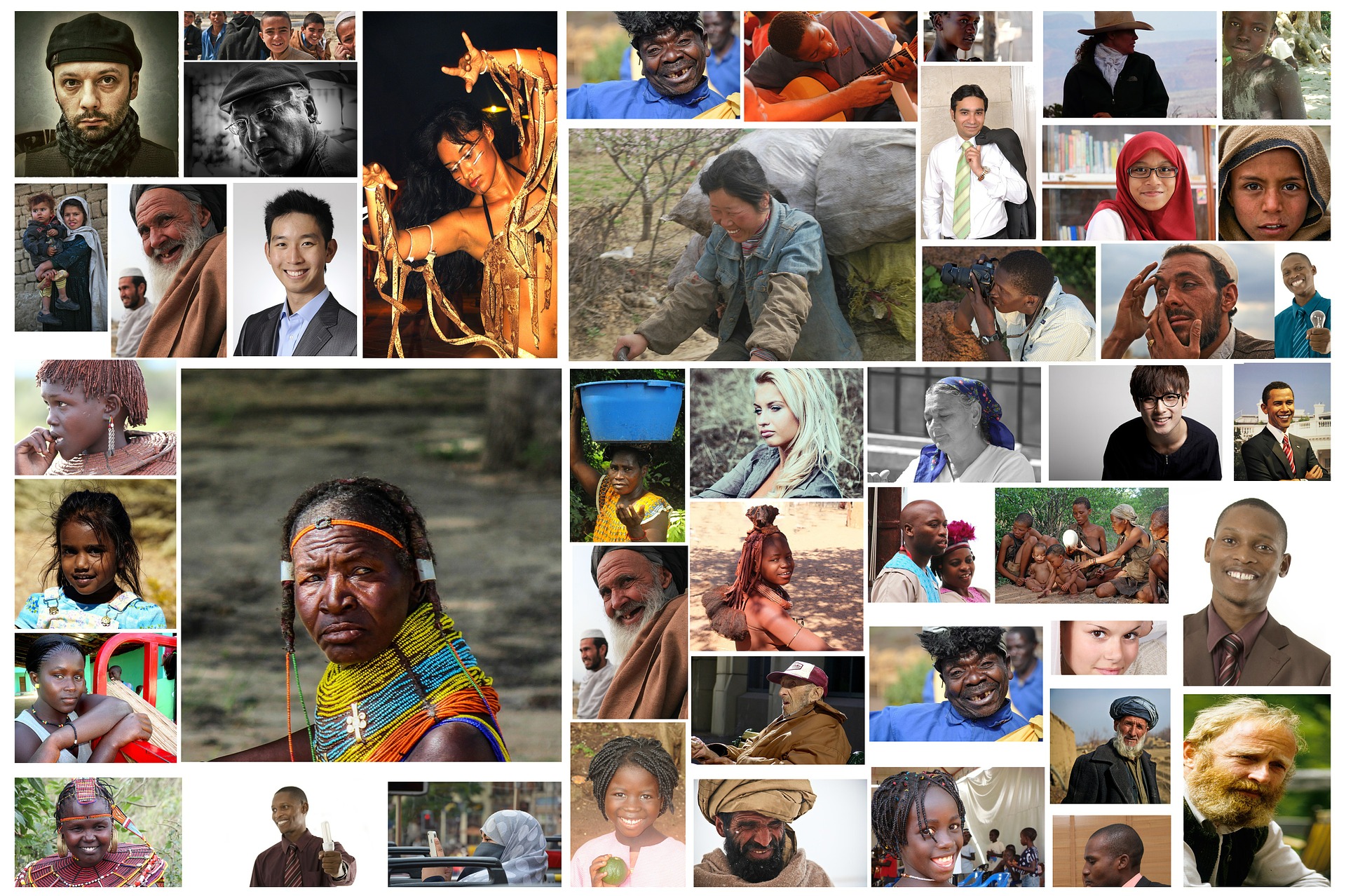
So, here’s a shift of perspective: diversity of language isn’t a problem – it’s a gift.
And then at Pentecost, we are told that there are people from all over the place, from diverse cultures and speaking many different languages, assembled in Jerusalem to celebrate the gift of the Torah. Into this diverse mix, the Spirit comes and through the disciples’ speaking in many languages. Each and every one is met and honoured, every language is represented, everyone can participate.
This isn’t one language to unite them all.
This is one Spirit to open all hearts and ears to the voice and call and gift of God in Christ. In the one Spirit, difference is preserved and included.
This is the work of the Spirit, who does indeed send us out into every nation and into diverse cultures, but not to make mini-mes everywhere we go. Not to take the gospel to them, but to listen for where God is already. Where God is already revealed, already present, already active there we are called to fan those flames, to nurture those tendrils and so to grow together in understanding.
The stories from Acts over the last few weeks have indicated to us over and over that the Spirit of God is for all people, everywhere. For women and men, for slave and free, for Jew and Gentile, for every one of us for living the daily disciplines of a life of faith in all our relationships and every activity.
The Spirit of God is to help us learn how to be fully present and wholehearted in all of our life.
This story, though, this story of rushing wind and tongues of fire and sudden courageous preaching which, although we didn’t hear it in the reading, is followed by mass conversion – this story kind of sets us up for disappointment or for a sense of inadequacy.
Because everyday life is not Pentecostal.
And you might think that it looks like these lucky disciples got zapped by the Spirit and they never looked back. They are transformed in a moment without having to do the hard work of change. The practising of disciplines, the daily noticing, of unlearning unhelpful patterns and learning new skills of listening, of expressing and of responding.
And you could look at the gospel reading and suppose it also points that way. Jesus tells the disciples that they will do the same works he has been doing and even greater works. And you may feel as uncomfortable as I do about the idea of attempting to raise people from the dead or heal people who are sick or suffer from mental illness. So it’s worth reminding ourselves about the long oneness conversation that we have also been touching into over the last six weeks.
When Jesus talks about his power, his works, he also points repeatedly to his relationship with God the Father. I can do nothing alone, he says. I only do what I see the Father doing.
It’s about oneness. It’s about relationship. It’s about you dwelling deeply in love and seeing that love dwells deeply in the other. We can do this too. We can practice the art of dwelling deeply in love and we can practice seeing the love that dwells deeply in others. We can honour and meet that love, point to it, encourage and cultivate the connection which is already present.
At the core of the Christian faith is a call into relationship – to open to One who loves us, to join in the diverse gathering, to take our seat at the table and to invite others to come, sit, eat, share. This is a story we can tell with humility and with courage.
We are all guests at God’s table. We all come with wounds that need to be healed, with stories that need to be heard and honoured. And although there are dramatic moments, when we look at the pattern of Jesus’ activity, we see him doing many ordinary things.
He eats and talks and works and walks; he prays and asks questions, and he makes observations. We see him interacting with many diverse people with generous inclusivity and a bias towards those who are overlooked and underserved. That’s a great pattern we can do too, and one that we can practice both in learning new ways to pray and in learning new relational and communication skills.
Perhaps you need to learn first to put down some of the old habits you have. Some of the ways I learned to communicate from my family were…not especially helpful. I’ve had to unlearn those so that I can pick up new tools – ones that are better suited to the purpose.
Because it’s no good just telling you that following Jesus means ‘being more loving’ without out also giving you practical ways to live differently. You can’t grow in love simply by adding pressure to how you usually relate to others and telling yourself that you must do better. Apart from the fact that this simply doesn’t work, it also leads to self-blaming and shaming because old habits die hard, and you will slip into saying something hurtful or losing patience and getting angry or feeling offended and withdrawing.
So, I want to say this: that the story of Pentecost is perhaps first of all an invitation to those of you gathered here, to open and receive once more. However you find yourself here today, there’s an invitation to come, sit at the table and receive – receive love, take it in and let love satisfy the hunger inside, let love quench the thirst for belonging, for understanding, for acceptance. Then, in the one Spirit, we can participate in God’s work to create and re-create beloved community here, together.
And if you are still thinking that the over all goal sounds good but the path to reaching it still seems unclear, then be assured that over the next few months of ordinary time we’ll be focussing on and exploring together some everyday, real-world ways to learn and practice how to live and grow in love.

