
You can find the reading for this sermon here
There is lots to think about here. I think the ancient story of Moses’ death – on the cusp of transitional change for the people of Israel – has some unexpected resonances for us in our times… see what you think.
This story marks an important transitional moment for the people of Israel, and as I reflect on it, I think there are a number of insights we might take from the passage and apply to our current circumstances.
There’s definitely something here for us to reflect on regarding how we approach and process death. This is a personal story of Moses, a man who experienced extraordinary times but who was, in the end, just a man – as human and flawed and beautiful as every one of us here – and this is how he faced and met his death.
This is also a collective story of the death of a leader and the loss of the stability and safety that he represented.
For the people of Israel, Moses has been the one constant since the escape from Egypt – well, God has also been constant, but in human terms Moses has been the mouthpiece, the figurehead, the guide, leader, advocate, model, judge and general for the people. From their perspective, he began this movement, he drew the people together and he orchestrated their getaway. He has wandered with these people in the wilderness for forty years watching an entire generation die around him, waiting for the time when the people and the promised land will finally be united.
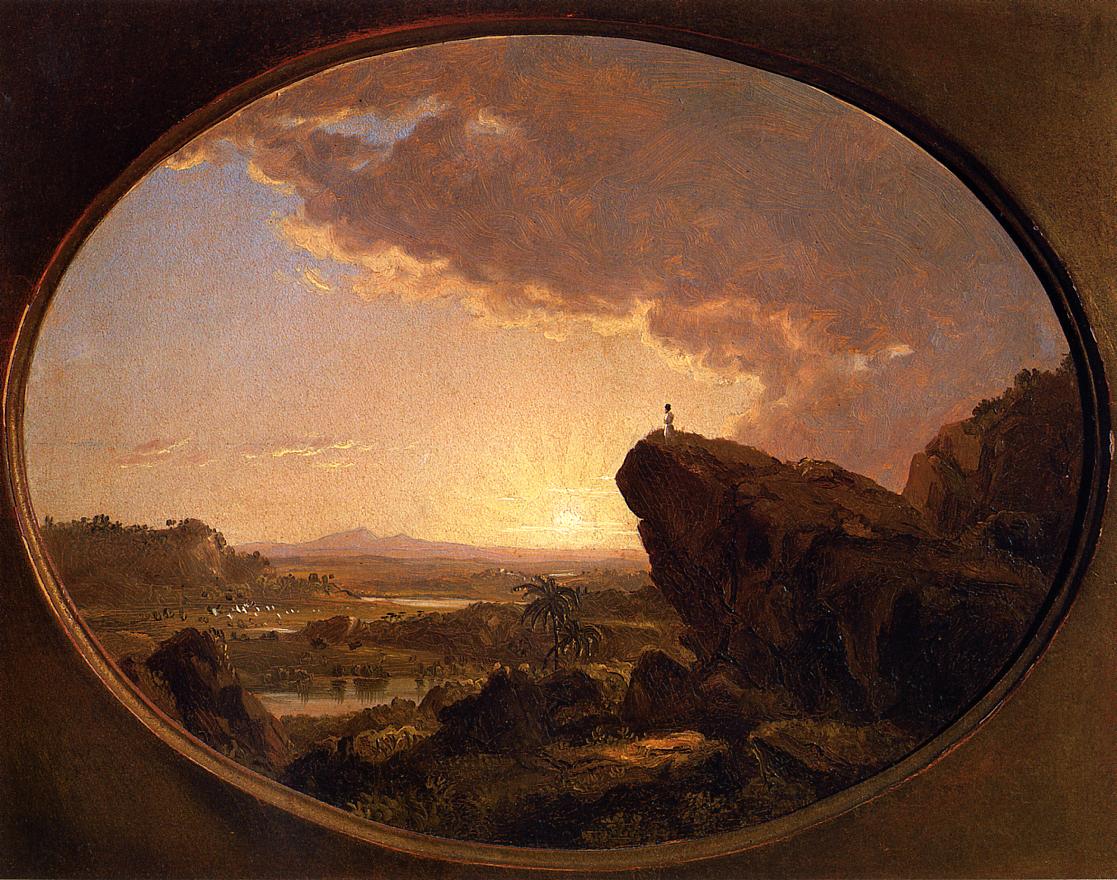
But God has already told him that he will not be allowed to enter the land. Even when Moses tried to negotiate God would not budge. So he is tasked with taking the people to the edge of the promised land and he knows – because God has told him – that once there, he will die. He’s 120, but he’s still limber enough to hike up a mountain, his eyesight is still clear enough to see a long, long way and he’s still…vigorous. But God lets him look at the land and then, on command, Moses dies.
So there’s the personal piece. He’s known it’s coming, so I like to think that Moses had taken that time to ensure that he died a good death.
I recall a visit I once made with a 98 year old man who was in hospital and looking forward to a full recovery. He had no interest in contemplating any alternative possibility. I think he was probably genuinely surprised when he died.
By contrast, I volunteered for a while at mercy hospice in Manurewa and I saw again and again how most people slowly took in and courageously came to terms with a terminal diagnosis. The woman who headed up the day unit where I volunteered and where patients came to give their caregivers a time out, was a bit of a live wire with a pragmatic sense of humour. She used to tell people that a terminal diagnosis meant that they had a much clearer timeline to work with than the rest of us. “The reality is that none of us knows how long we’ve got”, she’d say with a grin, “I might get hit by a bus tomorrow!”
So in some ways, this knowing ahead of time was a gift to Moses. The news that your days are definitely numbered can serve to sharpen the focus of attention on what really matters and on how you want to live these last months, weeks, days, breaths.
Because most of us glide through life in a fuzzy haze of endless dailyness. Yes, things change, seasons come and go, children are born and grow, there are achievements to celebrate, special occasions to enjoy. There are arguments and failures, disappointments and the occasional disaster. But we live with a gentle blindness to the end of our days…it will come, eventually, but not yet…not yet…not yet.
God’s command to Moses was that he would die when God said so and that was before the crossing of the Jordan. Moses had time to prepare himself and do all he felt he needed to do, say what he needed to say. The wise ones of the early church used to give this advice: keep your death always before you. Which is to say: keep your focus on what is really important. Is that disagreement worth staying angry about? Is that hurt worth holding on to? Is that fear worth living with?
What is really important?
And this is where the personal story becomes a collective story, because Moses knew one of the things that was really important was to make sure that the people would be able to move on without him. He knew that there was a totally different kind of journey ahead, with totally different challenges. He had time to prepare Joshua and the people for new leadership and a new direction.
Perhaps he also knew, given his familiarity with the stiff-necked resistance of the people, that they would not necessarily embrace these changes with grace and enthusiasm. He probably suspected that they’d cling to what they knew and what felt normal, bearing in mind that by this time, for the people of Israel, “normal” is wandering in the wilderness eating manna with Moses. They could see this was wandering way of life was coming to an end, and they may even have been pretty excited about what lay ahead.
But when Moses dies, notice that they collectively take a whole month to grieve. They take a whole month to pause and process, to let this truth sink in and to start the work of letting go of the old normal. They also give Joshua a month to get his head around what his new responsibilities are and to begin to get the feel of the shoes he’s stepped into. His is a very different leadership role as the people go from aimless wandering to moving with determination toward a very particular destiny.
Even with the warning, the preparation and the pause, this level of change, this depth of loss and disorder is very unsettling. Of course.
We know something of this too.
In the last fifty years or so we have been living with the effects of significant shifts in our culture from the slow collapse of the traditions and values of Christendom. The evidence of this is all around if you are willing to see it and the loss of this worldview as a given in our culture has provoked the classic reactions of grief – denial, anger, bargaining and depression.
There is unsettling disruption and disorder in all mainline denominations as our numbers of ministers and members dwindle. This is a reality that has been and is keenly felt and collectively we seem at a loss to know what to do next.
It’s not that a leader has died, but a world view has died and along with it we have lost the stability it gave us.
On top of that this year we have seen the massive impact of a pandemic. It has disrupted so many lives and so many systems – health, politics, economics, international relations, education, religious and family social systems to name just a few. The pandemic has proved a challenge to so many of the givens of our normal way of life. It is front and centre of the news globally but also it is the subject of everyday conversations – a consideration in our everyday interactions.
I think we are all aware and feeling this added pressure to an already bewildered community.
So perhaps we also need to pause and do some processing.
Perhaps we also need to slow down rather than rush to return to ‘normal’, rather than rush to fix the ‘problem’ of so many of our churches on the edge and vulnerable without enough leaders to lead.
We probably need to name and recognise what is already lost and what is slipping away; what is too hard to face alone; what we can’t bear to lose; what is scary and uncomfortable.
This is counter-intuitive, I know, and it’s not the pattern that our culture endorses. The urgency of the issues seem to force us to action before we really take time to see the whole shape of what is gone and what it is time for us to leave behind.
If we don’t take the time to pause, process and prepare, there’s every chance that we’ll just attempt to recreate the sense of safety we had before things started to unravel – and that’s a long way back.
There’s every chance we’ll limit what we can move toward, we’ll limit what new horizons we can open to and what particular destiny we are called to live into in these times.
So I wonder what you would say is normal for the people of St Peter’s?
And what is your sense of the new direction that is beckoning ahead?
This is a question that I ask you without judgement – it isn’t a question of rightness or wrongness. Because God is love and works all things for good. So the time spent wandering in the wilderness wasn’t a waste of time although it may have seemed so for some. Equally, the time to move into the land was wrong until it was right. So the time and energy given to sustaining the life of this church through the last 130 odd years also hasn’t been wasted.
But perhaps the time has come for crossing the Jordan.
The death of Moses and all the generation of people who died in the wilderness remind us that death and resurrection are the foundational, unavoidable shape of life. Everything, everything dies when God calls back the breath – and then life springs forth in newness, in eternal constancy.
You can’t have one without the other. You know this.
So, I wonder where you find yourself today?
Are you ready to climb the mountain and see what God gives you to see even though you may well not get to touch it?
Are you wavering in denial, grasping on to what is slipping away and convinced that there is no life without it?
Are you angrily defending the values and treasures of ‘normal’?
Are you flat and hopeless – wondering what is the point in trying anything truly new or different?
Where you are is simply where you are starting from. Any of these responses is a part of what it means to pause to grieve the loss of what is ending as long as we know this is a pause.
As long as we know that when the time is right, we’ll leave behind the way things were and set our eyes on the wide horizon of grace and love waiting for us, surrounding us and promised to us.
AMEN

