


Candle lighting and call to worship
As we gather together today, a sabbath pause in the busyness of life, we light this candle and remember:
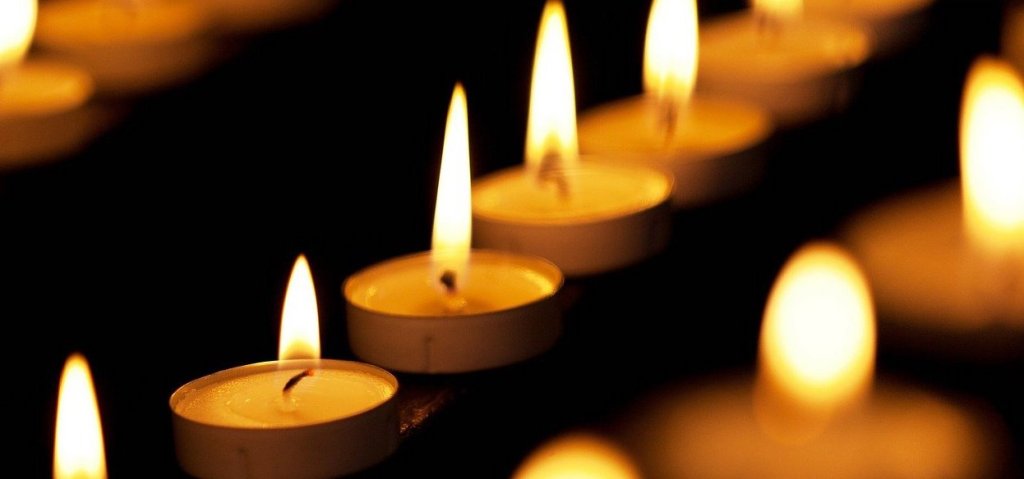
Christ is our light;
Christ shines in us;
Christ shines through us.
Creator God, you formed the heavens and the earth and all that is by your Word and your Spirit.
You give us life and breath, and so we come to praise you.
Redeeming God, you came to us in Jesus and walk this journey of life with us.
You know us completely. Our hearts and lives lie open to your loving gaze.
Healing God, your presence is balm to our hurts and in your loving forgiveness we are set free.
We freely offer ourselves to you, and trust you, Holy Spirit, to guide and inspire us.
The Lord’s prayer
–The Prayer of Jesus in Aramaic, translation from Desert Wisdom by Neil Douglas-Klotz 1995
O Breathing Life, your Name shines everywhere!
Release a space to plant your Presence here.
Imagine your possibilities now.
May your counsel rule our lives and make our intentions clear
for the common creation.
Embody your desire in every light and form.
Grow through us this moment’s bread and wisdom.
Untie the knots of failure binding us, as we release the strands
we hold of others’ faults.
Help us not forget our Source,
Yet free us from not being in the Present.
From you arises every Vision, Power and Song from gathering to gathering.
May our future actions grow from here!
AMEN
Thoughts on a wedding ~ by Steve Garnaas-Holmes
God isn’t waiting till we die to decide whether to be with us forever.
God’s goodness isn’t dependent on ours.
God is in love with all Creation, and wholly devoted. Life is the Beloved’s marriage to us.
The whole world is God’s wedding ring, given in steadfast love and fidelity.
Every sunrise is wedding music. Every breath is God’s “I do.”
We hope for all sorts of smaller blessings— good weather, good food, good hair, good health, good feelings, good parking. But deep down you know how minor those things are.
Our deepest hope is for God’s good love, God’s unfailing presence.
And that’s a done deal. A promise.
None of life’s uncertainties can change that—the delights and disasters, the marvels, the suffering—none of it changes
The Absolute: that God loves us like crazy,
will be faithful to us forever,
will give us everything God owns and do anything to be with us,
will die for us; and that even suffering and death will not part us,
but bring us closer.
We are God’s. God holds us close.
And what God has brought together, no one can break apart. That’s the good news—this weekend, and to the end of time.
Reading: Matthew 22:1-14
And in reply, Jesus spoke to them in parables again, saying, “The kingdom of the heavens has been likened to a man, a king, who arranged wedding celebrations for his son. And he sent out his slaves to summon those who had been invited to the wedding celebrations, and they did not wish to come. Again, he sent out other slaves, saying, ‘Say to those who have been invited, “Look: I have prepared my luncheon, my bulls and fatted beasts have been sacrificed, and all things are ready; come to the wedding celebrations.”‘ But they went away in indifference, one to his own field, another to his business; but the rest overpowered the slaves, treated them brutally, and killed them. The king was then enraged and, sending his armies, destroyed those murderers and burned their city. Then he says to his slaves, ‘The wedding is indeed ready, but those who were invited were not worthy; go, therefore, to where the roads let out, and summon as many as you find to the wedding celebrations.’ And those slaves, going out into the streets, gathered together all whom they found, both the bad and the good; and the wedding hall was filled with those reclining at table.
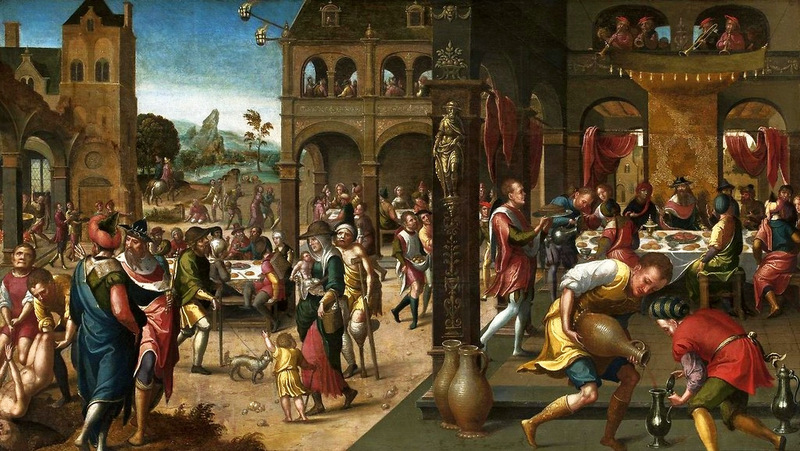
But the king, coming in to see those who reclined at table, spied there a man not clothed in a wedding garment; and he says to him, ‘Friend, how did you enter here not wearing a wedding garment?’ And he was speechless.
Then the king said to his servants, ‘bind his feet and hands and throw him into the darkness outside.’ There will be weeping and grinding of teeth there. For many are called, but few are chosen.”
~ A translation by David Bentley Hart
Context and Considerations
This particular parable is given as part of a directed response to the chief priests and pharisees. It has a parallel in Luke’s account of the gospel, but there are some significant differences between them – most obvious is Matthew’s wholly unique exchange between the king and the guest without a wedding garment followed by having him bound and expelled into the darkness outside. Matthew seems to have a thing about the wailing and gnashing and the (final)judgement that separates some into light and others into darkness. Six of the seven times this is mentioned it’s Matthew who is telling the story. Despite how infrequently this version of judgement is found in the New Testament, the images of exclusion and rejection are frightening and loom very large in the Christian imagination.
This could be, in part, because our brains are hardwired to attend to and recall negative experiences, possibly because they pose a threat to our survival and so we need to learn the lessons fast to avoid repeating them. That means that painful, difficult, unpleasant and uncomfortable feelings all stick like velcro in our memories, and often pop up uninvited when we are quiet. By contrast, warm, affirming, joyful and pleasant feelings slide out of recall like oil on teflon and research shows that if we want those good experiences to stick, we have to consciously embrace them for at least 15 seconds. You’d be amazed how long that feels when you try and sink in and embrace a warm fuzzy moment.
So, that enduring sense of threat around exclusion means that we have made much of these few instances when it occurs. Matthew’s account of the gospel is the one where we are reminded over and over that God is with us. That’s the bigger perspective we need to embrace and consciously recall as we acknowledge that there is tension in this text.
It’s probably also helpful to recognise our usual response to tension…for many of us, that means we attempt to resolve it/fix it/explain it….
or we may choose to avoid it/ ignore it/pretend there is no tension here….
Or you may like to wade on in and poke it with a stick…
So as we engage with this text, first of all I am wondering where, listening today, you felt the tension in the parable?
Was it in the rude dismissal of the invited guests when the king let them know that everything was ready and it was time to celebrate? Was it in the violent murder of the messenger slaves which prompts the violent responses of the king? How does this fit with Jesus’ teaching about turning the other cheek, loving your neighbour and forgive, forgive, forgive?
Did you feel the tension in the radical hospitality of extending the invitation to good and bad alike to come join in the wedding celebrations? What does that say to you about the hard work in the journey of discipleship, of the importance of faithful living or the mysterious but foundational inner work of transformation? How do you make sense of that?
Was the tension most noticeable for you in the exchange between the king and the wedding guest who wasn’t properly dressed for the occasion? If the guests were all just invited, how could any of them have been better prepared to attend with a wedding garment ready? Why call him friend and then toss him out? Why toss him out at all? What are these credentials for inclusion that the king requires and how are they acquired? And how does that fit with the radial inclusion we see in Jesus’ ministry, his forgiveness of sin even when there is no prior sign of repentance, his healing of those usually deemed unworthy and unwelcome?
Was it the dire consequences for being speechless? I don’t even know what to say about that.
Was it in the last line – the gap between those called and those chosen? What does it mean to be invited (called…same word in greek) but not chosen? Who does the choosing? On what grounds? Where do you hear freedom and grace in this story?
And lastly, I wonder if this parable shows us what happens when humans get involved in the telling of Divine Grace? Our scriptures are a collection of stories of ongoing struggle to receive and process the revelation of God’s grace and love. We resist the expansive inclusion. We limit and set boundaries, we can’t accept the paradox of unworthiness rewarded with worth. I wonder if, here in our very scriptures, is the acknowledgement our own tendency to meddle with God’s freedom to include, to forgive, to give up power, to love and to love without end?
Conversation Question
Consider how you have noticed and resolved these tensions in the parable in the past…and what (if anything) has been left unresolved in your heart…. take turns sharing your perspective on this text and what it says to you today.
Feedback
Prayers of the people
God, may our love be genuine.
May we let go what is evil in us,
and open ourselves to what is good.
By your Spirit in us may we truly love others:
not just to tolerate them but to honour them.
Give us your zeal, your energy, the true desire to serve you.
Give us the faith to rejoice with hope,
to be patient in suffering, and to persevere in prayer.
Help us take the opportunities we will have today
to contribute to the needs of those around us…
to extend hospitality to strangers…
to bless those who oppose us— to bless and not to curse them.
We are mindful of those who rejoice, and we rejoice with them.
We are mindful of those who weep, and we weep with them.
May we be present for them today.
Give us your grace to live this day in harmony with others.
We do not need to pretend that we are wiser than we are.
Help us not to be haughty
but to know that the lowly are our peers.
Give us grace to not repay evil for evil,
but to focus on what is good for the sake of all.
Give us grace to live peaceably with all.
Give us your grace to feed the hungry even if they oppose us,
to give drink to the thirsty even if we do not like them.
We pray that we will not be overcome by evil,
but that we may overcome evil with good,
by the grace of your love in us.
Amen
~from a prayer by Steve Garnaas-Holmes, based on Romans 12:9-21
Blessing
May the Lord bless you in your working and your resting,
in your laughing and your crying,
in your eating and your fasting,
in your travelling and your staying.
May the Lord abide with you,
each day, each night.
Amen.
Go in peace, to love and to serve in the name of Christ.

