
The lectionary texts for this week can be found here. I am preaching from the Galatians reading and the gospel.
A couple of weeks ago, the parish council and I spent a day at the Peacemakers retreat centre near Helensville. St Peter’s is due – actually a bit overdue – for a parish review, and so in preparation for that we were revisiting the work that was done five years ago to form both a vision statement – who we are as a congregation and who we are aiming to become – as well as our mission statement – how we will live the vision into our shared life together. We began that work by reflecting on our values, those we hold for our personal lives, and those we bring to our communal life – and then we drew on the conversations and insights around those to form a new vision statement.
It’s this: We are a Christian faith community growing in love through the grace of God.
I hope most of you will find that resonates with you and offers space for others to belong. We tried to keep it simple and to avoid jargon, but of course there are aspects to unpack in that short sentence anyway. The most obvious one to me, at least, is this: What does it look like when we grow in love? And how might we do that? I’ve been talking about this week by week for some time now, so I hope you are beginning to feel ready for a few practical applications to work with.
The reading from the letter to the Galatians gives us some excellent entry points, I think. Firstly, those opening sentences: Christ has set us free to live a free life. So take your stand! Never again let anyone put a harness of slavery on you. Paul uses the concept of slavery as a way to describe the experience of being held captive, fettered or restricted by religious rules as opposed to the liberating, freeing and equalising life that is the gift of the gospel and the growth journey for all Christians.
This is the life calling for all of us – to learn to live in freedom and to use our freedom to help free others – and Paul ends this particular segment with a reminder that it’s not a warm, fuzzy feeling we get on Sunday morning or whenever, nor is it an idea we think about – it has implications for the details of every day.
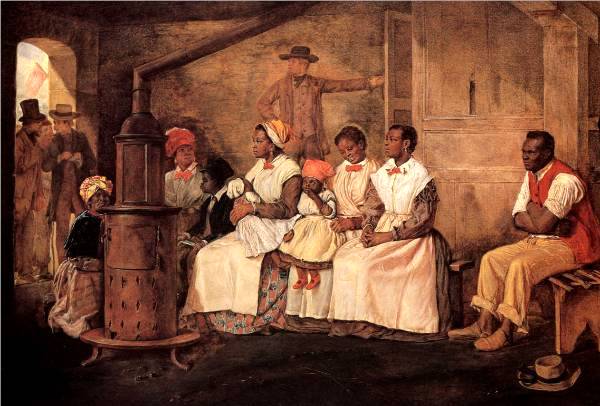
Just as a side note, Paul uses the concept of slavery in his letters, sometimes making it subversively positive and sometimes used negatively. Slavery is something that in Paul’s time and culture was framed as a normal part of life – just the way things are – and it appears that Paul himself hasn’t really got around to considering yet, if owning slaves is actually wrong in itself. Several times Paul flips the values of the day and refers to himself as a slave to Christ in his letters to express how he practices faithful living. Sometimes like here, he keeps the convention and uses slavery as a description of what it feels like deep inside when we fail to live free lives and instead allow faith to be a shackle and people to be oppressed.
But it’s not always the rules of religion that keep us shackled. Sometimes – often – it’s some unwritten rules that we live by and those can be both hard to spot and hard to drop. Another aspect of our freedom is articulated nicely by African American author Toni Morrison. She wrote that the function of freedom is to free someone else. This adds a lovely reminder to us that we aren’t ever talking just about personal freedom, or personal salvation. God’s agenda, God’s action plan and mission is always about everyone, everything, everywhere and all together. We are not truly free until everyone is free.
Salvation and freedom are big picture inclusive concepts and at the same time, the only way we live them is in the small steps, the little things, the daily ordinariness of our lives. If you make small changes towards freedom, you can positively affect those around you, bringing greater freedom for them, too.
And that brings us quite nicely to the gospel reading for today. In the commentaries on this passage, there’s often a reference to this little collection of exchanges as ‘hard sayings’ of Jesus. That phrase says a lot about our reaction to these sayings, more than to their content. We could just as well call them the challenging sayings, or the uncompromising sayings or the gritty, realistic sayings. But no. We think they are hard.
In these sayings, Jesus is clear about the cost and the commitment of discipleship. He’s not sugar-coating things because in the long run, clear is kind.
Some of us were taught that we need to avoid upsetting others if possible, so instead of making a clear request or giving a clear no, we soften and modify – to be kind. But the truth is that a fuzzy boundary is worse than useless – it’s unkind.
Clear is kind – which means that if I want to say no but I actually say yes and then pull out later, or I do it with resentment then I am being unkind. Or if I say maybe and leave you hanging in uncertainty, then I am being unkind. Or if I don’t ask for what I need, but I hope you’ll notice and guess, or if I do something for you that I want you to do for me, but I don’t actually ask you to do it – and then I get resentful that you haven’t done it for me…well, not clear, not kind.
Clearly saying what I want and mean, what I can do and what I can’t or am unwilling to, is much kinder than many of our efforts to be kind by being fuzzy. A clear no or yes, or even an I’m not sure yet, but I’ll let you know one way or the other within a given timeframe…that’s kind.
Jesus is clear. What we can’t tell, though, is what kind of tone of voice these exchanges had…clear doesn’t have to mean cold or harsh.
And since it’s Jesus who is saying them, I am sure that he’s warm and connected to the people he’s talking to.
I am sure he’s making eye contact, that he’s not just looking at the person who says they want to be a disciple, he’s looking into them. He’s seeing them as they truly are, recognising what is already there and what is still becoming and he’s telling them what they need to know so that they can choose if they want to carry on growing. I am sure he is free from the fear of their rejection. I’m sure he’s free from needing them to like him or from any anxiety about needing to increase his numbers. I have no doubt that he meets them with openness and holds a safe space where they can ask their question or make their offer.
And I am sure the other disciples are struck by his responses – that he does not pull just anyone along in his wake. That he cautions, qualifies and even puts people off.
Paul is also clear. In the Galatians reading, Paul is using clear, firm language because he’s incensed that another group has been influencing this community with teaching that is based on legalism and separation. Even when he’s motivated by protective love, he can be fierce! Paul doesn’t often go softly, and his style of being clear can easily sound like it’s not too far off of tough. And tough love when it’s not grounded in warmth and empathy is just a fancy way of saying punishment
No doubt you have noticed that not everyone learns to soften their edges to get by…some of us learned to approach things like Paul – with an excess of clarity, and a toughness that helps to push through difficult situations.
It’s good to be aware that neither of these two strategies are what Jesus is modelling for us here, and neither of them are signs of living in freedom. So if we’re going to work on growing in love, maybe a good place to start is to look at how free you are, and where you are stuck or shackled by fear – even if on the surface it doesn’t seem like it’s fear that is holding you back.
Maybe you might consider first, how unfreedom shows up in your life?
As we’ve seen, unfreedom can look different for different people.
Are you often worried about upsetting other people, or letting people down, or looking like you are shirking responsibility?
Are you afraid of doing the wrong thing and making a fool of yourself?
Do you get caught up trying to keep others happy and bend over backwards to avoid conflict?
What would it feel like to let that go? What would it be like to feel so comfortable in yourself that you can be kindly free and clear with others? Who else might you set free if that happened?
Perhaps you experience unfreedom differently.
Perhaps unfreedom shows up for you when you find yourself acting with too much clarity….do you get so sure you know what’s right that other people find you rigid, legalistic, or opinionated?
Does unfreedom mean you struggle to allow for difference of opinion, or doubt, or appreciate that others may have a different experience or want a different outcome?
What would it feel like to let that go? What would it be like to feel so comfortable in yourself that you can be free and warmly open to others? And who else might you set free by that change?
Perhaps you value freedom so highly that you are avoiding the harder parts of life, and you can spin anything to find the silver lining?
What would it feel like to let that go? What would it be like to feel so comfortable in yourself that you can be free and courageous to acknowledge the parts of life that really are hard and painful.
What would it feel like for you to unhook from all that effort to stay in your stuckness – because it takes a lot of energy to push all the time or run all the time or manage how you think others are thinking about you – and instead, to connect with your own inner light, to trust the deepest truth that you are the beloved and let that shine?
Here’s a practice that we’ll do together, and you can try this through the week too.
Let’s pray.
With eyes closed…..sitting in a comfortable and alert posture….next time you breathe in, draw the breath down into your belly and then let it flow out….do this two or three more times, letting the belly be soft, feeling the ribs rise out to the sides of your body and softly flow back in as you exhale….
Letting the breath flow like this….begin by bringing your awareness to your feet…see what you can feel now that your attention is there….just notice what you sense….and then move your awareness up your body – ankles, knees, thighs…feel the pressure of the chair beneath you….coming up to belly, chest, shoulders, arms, hands…..neck, jaw, brow….as you sweep your attention through your body, you are bringing yourself more deeply into fullness, more fully present to God’s presence….
If you would like to, imagine that you are a candle…a little flame that shines in all directions, sometimes flickering, sometimes burning bright…… the clarity of that light flowing freely, illuminating your daily life….showing you where you are stuck….guiding you into freedom….whatever rises into heart or mind in response, offering this to God as your prayer….
Amen.