
Candle Lighting
We light the flame,
a symbol of the light of Christ among us and within us:
a beam we learn to bear
and to bear witness to.
Call to worship
With our lips we praise you, O God,
We tell of the astonishing beauty of your creation and the joy of your unending love.
With our minds we praise you, O God,

We ponder the depths of your compassion and discern your way of justice and mercy.
With our hearts we praise you, O God,
We feel our soul’s desire for you and our response to follow as disciples of Jesus the Christ.
We give you thanks for this opportunity to gather;
to learn and grow and share in the life of the Body of Christ.
Amen.
Confession
We confess we have forgotten that we human beings are part of the community you created and that we are reconciled to one another through the cross, called to be in solidarity with all creation.
We confess we have failed to celebrate the diversity and richness of the world and the peoples you have created.
We confess that we have failed to show hospitality to the stranger, and that we have valued our own traditions and cultures over those that are unfamiliar to us.
Lord, in your mercy forgive us.
Open our eyes to the work of the Spirit in the world and to the truth of our belonging to one another and to you.
Amen.
Poetry for the soul – You wait for me
From Meister Eckhart’s book of the heart by Jon M. Sweeney and Mark S. Burrows
I think mine
is the work
of finding You,
but You wait
for me in my
joy and strife
to reveal
who You are,
which is love,
and to radiate
what You are,
which is light.
Reading: Exodus 3:1-6
Moses was keeping the flock of his father-in-law Jethro, the priest of Midian; he led his flock beyond the wilderness, and came to Horeb, the mountain of God.
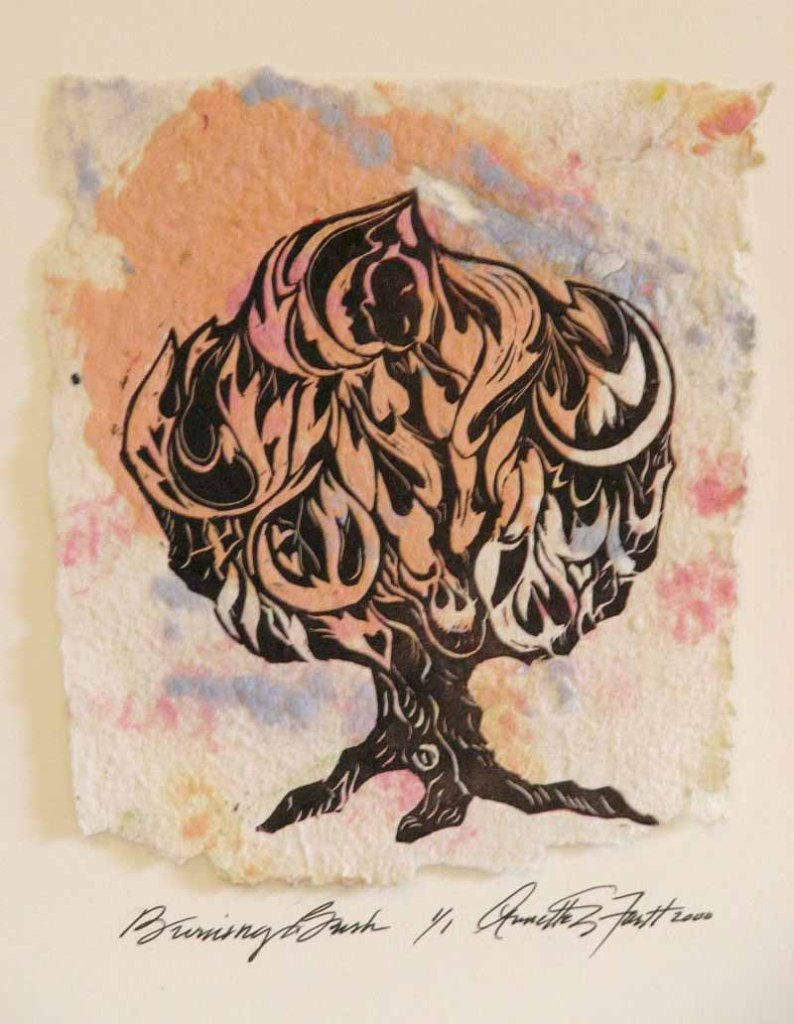
There the angel of the LORD appeared to him in a flame of fire out of a bush; he looked, and the bush was blazing, yet it was not consumed.
Then Moses said, “I must turn aside and look at this great sight, and see why the bush is not burned up.”
When the LORD saw that he had turned aside to see, God called to him out of the bush, “Moses, Moses!” And he said, “Here I am.”
Then he said, “Come no closer! Remove the sandals from your feet, for the place on which you are standing is holy ground.”
He said further, “I am the God of your father, the God of Abraham, the God of Isaac, and the God of Jacob.” And Moses hid his face, for he was afraid to look at God.
NRSV translation
Reflections
For the last couple of weeks we’ve been talking and thinking about our values, the stories that have formed our values and the way those values are then embodied in what we do. Anne Overton shared some stories where she has seen the values of love, acceptance, grace and gratitude brought to life through practical caring, creating spaces where people can gather, learn, work, grow, laugh and share.
It would be easy to assume that because you gather together each week, most weeks, you share the same values and have versions of the same kinds of stories about how those values have been formed and are now embodied in the activities of the church. We could take these as a given and move on to thinking about how you might begin doing something different or doing more. But this time between ministers which often feels like a time of disruption and vulnerability – like a hermit crab between shells – has also seen the additional pressure of the pandemic and the total dislocation of all things ‘normal’.
During our first lockdown, there were many who made the observation that this had changed everything…that even when we were allowed to go back, we couldn’t go back. There were those who suggested that things – the shape of life and the norms of life – had been unalterably changed. And then the restrictions were lifted, and yes, things were a bit different, and we know that some have lost jobs and others have lost more… We are all living with more uncertainty and a bit more awareness of the pull of busyness and business as usual….
But has anything really changed?
The malls are still thick with shoppers, the food courts still teeming, queues outside MacDonald’s and a longing for sports, movies, theatre, live music…. It seems that there are still many things in place which feel so utterly solid that we can’t imagine they really could change or that we might have to live without….
A trip to the islands in winter….
A readily available, moderately priced paperback book ordered online and arriving within two weeks….
A weekly routine of gathering to sing, pray, listen and reflect….
Or whatever it is that you hold as ‘normal’ or ‘obvious’ – a given or perhaps, even, a right.
So since the pandemic is forcing us to adjust again and again, and since you are still bang in the middle of a time between ministers, I thought it would be good and helpful to spend some time digging in to the origin stories of this community by digging in to the origin stories of the people of Israel. While we have been exploring the parables in depth, the lectionary readings of the Hebrew scriptures have been following Moses in his journey from baby in the basket among the reeds to murderer and then sheep herder. We pick up the story in the wilderness, as Moses approaches the mountain of God and sees something inexplicable. His curiosity is piqued, and he turns aside to look more closely, only to hear God call him by name. Moses responds with the same words we hear in the mouths of Abraham, Jacob, Joseph and Samuel when God calls to each of them. ‘Here I am’.
Now two interesting things happen next.
First of all, God tells Moses to take off his sandals.
We have our own cultural context where removing shoes is a sign of respect for the space you are about to enter. It’s also a bit of a housekeeping thing – the communal space is cared for by community responsibility for cleanliness. We shed the outer layers in order to leave the dirt of everyday life outside and in order to preserve the space inside. There is probably other significance in this gesture of removing our shoes, and I wonder what it might mean for you?
Moses, though, is standing on a mountain. He is not about to enter a building. There’s no issue of tracking dust into the temple. And yet God tells him to remove his sandals.
There is still this call to shed the outer layers when we encounter the Holy One. Take off those skins, take off the leather sandals, but also shed whatever protective skins you have put on – whatever stories you are telling about yourself and about God – and come before God with nothing to hide behind, nothing to shield you.
Moses was a displaced child, raised by a woman who was not his mother in a culture that was not his own. What kind of story would he have told about that? Moses was also a man with a dark secret. That’s a story on its own. Moses had gone for a prince in the house of Pharaoh to a sheep herder in the wilderness of Midian. Now a husband and father and exile. I can imagine what kinds of stories of shame, pain, blame, fear, loss and dislocation he might he have carried within him.
So here’s a question to ponder….
I wonder what kind of protective skins you have taken on…I wonder how you have hidden from love?
Question for conversation
When Moses is told to take off his sandals, he is also told why – for the place on which you are standing is holy ground. The ground is already holy. It was holy before the angel lit the bush on fire, before Moses turned aside and before God spoke from the bush.
Moses is on holy ground. So are we.
The earth is the Lord’s, every common bush is afire with God, the heavens tell of God’s glory, this space, this ground, this whole earth is holy.
You may have no difficulty agreeing with that.
But, so what?
What does that mean for the building we call the church?
What does that mean for the activity we call ‘worship’ every Sunday morning for 60-80 minutes?
What does that mean for the other ten thousand minutes of each week?
Do you live them on holy ground?
What would it look like, feel like, sound like if you approached life with the skins off and aware of the holy ground all around you?
What’s stopping you from living this way?
Prayers of the people
God of wilderness and jungle, God of liberation and revelation, you call to us, inviting us to turn aside…may we learn to respond ‘Here I am’ in each moment and each breath.
God of beauty and wisdom, God of awe and wonder, you inspire us, inviting us to draw near….may we learn to shed our resistance and surrender to Love in quiet reverence.
God of grace and goodness, God of healing and compassion, you energise us… may we learn to let you guide us into the flow of your peace and joy so we live and move and know ourselves alive in you.
God of connection and partnership, God of community and communion, you draw us on….may we learn to live more and more with an open heart to all, to offer the gifts of our lives in the service of your healing, restoring work in the world, for the world.
In the holy name of the Three in One we pray,
Amen.
Blessing
As you prepare to leave this sacred space and to move into the sacred space of your homes and work, may you go energised, enlivened and renewed.
Go into the world:
dance, laugh, sing and create.
We go with your encouragement, O God.
Go into the world:
risk, explore, discover and love.
We go with your encouragement, O God.
Go into the world:
trust, hope, struggle and remember.
We go with the assurance of your love, O God.
Blessing words
May the Spirit who moves through all creation,
who speaks through the prophets and the poets,
and who acts through those who care,
awaken us in each moment of our lives
to the flow and power of love.
Amen.

