
Call to worship
Here we gather together, people searching for healing and hope;
Here we are met by the One who would bless us with abundant life.
Here we are called into belonging, the family of God’s household;
Here we see no strangers, only sisters and brothers of ours.
Here we are welcomed and embraced, renewed and assured of our worth;
Here we recognise the light of the Christ shining in every life.
Amen
Candle lighting
We light this candle to remind us that we come
from the corners of the world,
from the confusion of life,
from the loneliness of our hearts: so gather us, O God,
to feed our minds;
to fire our imagination;
to free our hearts;
So gather us, O God!
Reading and Reflection 1
These opening words of the Hebrew Scriptures, have the rhythm and repetition of a poem or song, and they date from around 6BCE, a time when the people of Israel were in exile.
They are part of a group of writings that have been identified as being from the Priestly school, a community of scholars whose interest and emphasis focussed on the Temple, on the pattern of worship practices, on ritual and ceremony: all the things that outwardly identify a religious community.
These texts were written at a time when the people were without the norms of gathering for worship, without being able to join in the ritual, communal acts of faith.
Sound familiar?
So from that time and those conditions, what becomes the central identifier for the community is keeping sabbath.
Wherever you are, whoever you are, you can take a day for gratitude and celebration (in exile) for God’s goodness and abundance.
Sabbath is a regular invitation to recognise God’s presence in the midst of suffering and loss, a re-set of the intention to open to goodness and blessing in the midst.
In part, it’s also a willingness to recognise what you had taken for granted and to see everything with fresh eyes.
I wonder what you noticed you had taken for granted, and what are your lockdown stories of recognising grace, appreciation of blessing or seeing from a new perspective?

This is what gratitude sounds like.
Many of the psalms also date from the time of the exile, so let’s offer our prayers of gratitude together using psalm 145 as our guide.
There are also psalms from the exile which focus instead on lamenting loss, on remembering the trauma of defeat and naming the pain of separation and death.
We don’t have many good tools or models for how to be with our pain. Our tendency is to avoid pain, and we have lots of tools for that, but the truth is that either we find a way to recognise, process and integrate our experiences of pain or we will find ourselves passing on our pain to those around us.
Numbing and denial are the first and most common ways we hide from pain, but we also have some other tools that we use.
We hide from pain by comparing it with others to see whose is worst. This can allow us to then judge our own pain unworthy or wrong and not worth attending to.
We can hide from processing our pain by blaming someone else for making it happen.
We can hide from pain by explaining it away as God’s will, or as a lesson to learn or punishment for some sin.
None of these strategies reduce our suffering – some of them add to it. None of them release us from the fear and the energy of the pain.
So here’s how we move toward wholeness in the midst of our suffering: We take our courage in both hands and we give space for what we are feeling. We name it.
We let it be what it is, we let ourselves feel it – loneliness, fear, shame, guilt, rejection, isolation…whatever it is, give it a name and own it.
This is how I feel.
This is what’s happening in the world.
This is what hurts me. This is what’s hurting us.
This is where I am in need, where we are in need.
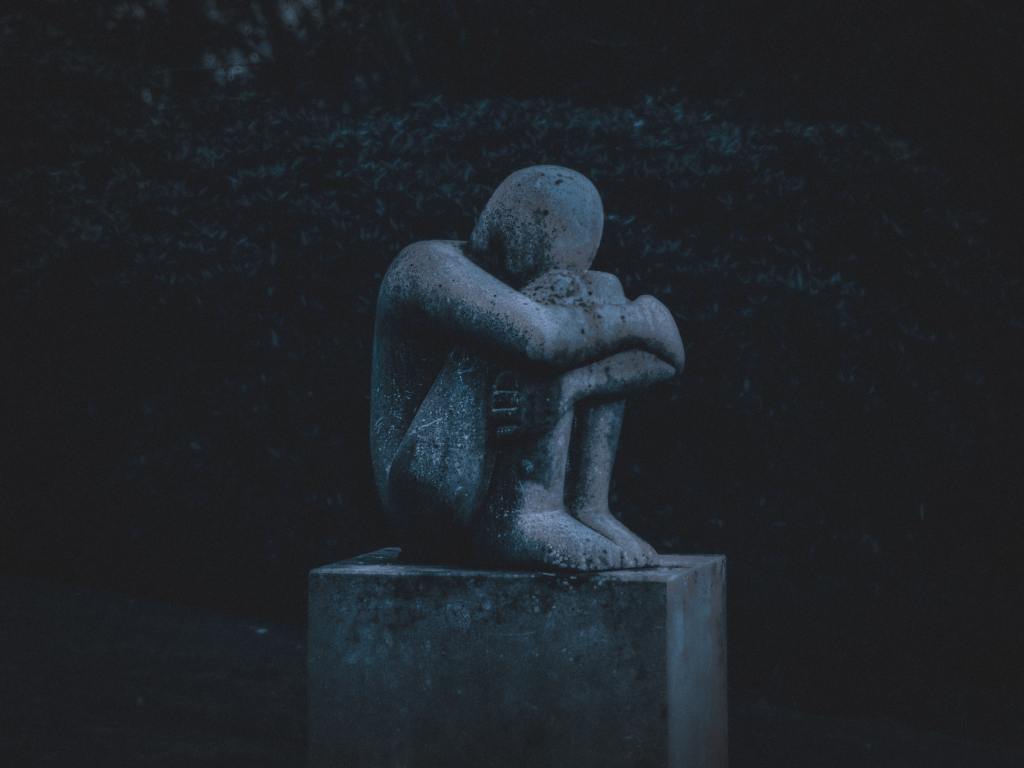
This is what lament sounds like.
Let’s offer our prayers of lament together using psalm 13 as our guide

Questions for conversation and reflection
What have you learned from your lockdown experience?
When we could not gather together in this building, what practices of faith became important for you?
The people of Israel focussed on Sabbath keeping as their faith practice. What would you say is your Christian practice identifier and how does it involve you in God’s invitation to participate in the mission of healing, serving and delight?
Reading and Reflection 2
The reading from Genesis tells us that human beings are made in the image of God. At the time this poem of God’s generative, creative activity was written, the creation stories in the surrounding cultures were full of violence and destruction. The gods were competitive and at war with each other. Humans were formed as servants or slaves to please the gods or suffer the consequences.
The Genesis story is radically different.
The God of the Hebrews creates for pleasure, making each new thing to be in relationship with each other and with God. The God in whose image we are made is one who makes space for others – who says, ‘let there be…’, one who nurtures and supports growth and fruitfulness.
This is the template for human being. And our being is the wellspring out of which human doing flows. We are created for relationship; for finding pleasure in the goodness around us; for taking care of others – animal, vegetable and mineral – and we are created to yield to the other; to let there be an ‘other’ who is good and not like me.
In the gospel reading, Jesus commissions the disciples to go to every nation and on the way, to make disciples.
The mission of God was begun in creation and it has not changed.
The commission of Christ to us as disciples is an invitation to be partners in God’s mission with Jesus as the model for us to imitate. We are beings in relationship, so as we are, with others, we are called make disciples. Not as a special, separate mission activity, but just as we are, whoever we are with, we are called to be humble, honest, courageous and compassionate wounded healers.
Only if we are honest with ourselves can we be humble. Only if we are humble can we be open to learn from those who are unlike ourselves.
Only if we are courageous can we risk the hard conversations and the forgiveness necessary for healing relationships.
Only if we are compassionate in our relationships can we recognise that our own healing is connected to the healing of the world. We cannot be made whole without our neighbour.
Only if we are willing to pour ourselves out for another – to put aside our likes and dislikes, our rights, our ‘norms’ – and open to the gift and grace of what is beyond us – only then can we really serve and grow.
Questions for conversation and reflection
It would be easy to ‘return to normal’ now that we are allowed to gather again.
In our presbytery and across the country, ministers and congregations are recognising and accepting the reality that what has become ‘normal’ in how we ‘do church’ is not bearing the fruit of sustaining, vital and life-giving communities.
How might we integrate the learning from the lockdown into the way we gather so that we might create an environment for growth, joy and service?
Prayer of petition
We pray for the fragile ecology
of the heart and the mind.
The sense of meaning
So finely assembled and balanced and so
easily overturned.
The careful, ongoing
construction of LOVE.
As painful and exhausting as the struggle for truth
and as easily abandoned.
Hard fought and won
are the shifting sands of this sacred ground,
this ecology.
Easy to desecrate and difficult to defend,
this vulnerable joy, this exposed faith,
this precious order.
This sanity.
We shall be careful.
O God of goodness, delight and generosity,
Help us to be careful.
Teach us to be careful,
With others and with ourselves.
Amen.
Adapted from a prayer by Michael Leunig
Blessing
May the peace of God the Christ be with you and rest upon you, so that your life radiates peace.
May the joy of the Holy Spirit fill you and refresh you, so that your life overflows with joy.
And may the Love of God surround you and embrace you, so that your life is lovely with love,
And so go out into the world to serve, that through our living in love, joy and peace all the children of the earth may know we are one family.
Amen.