

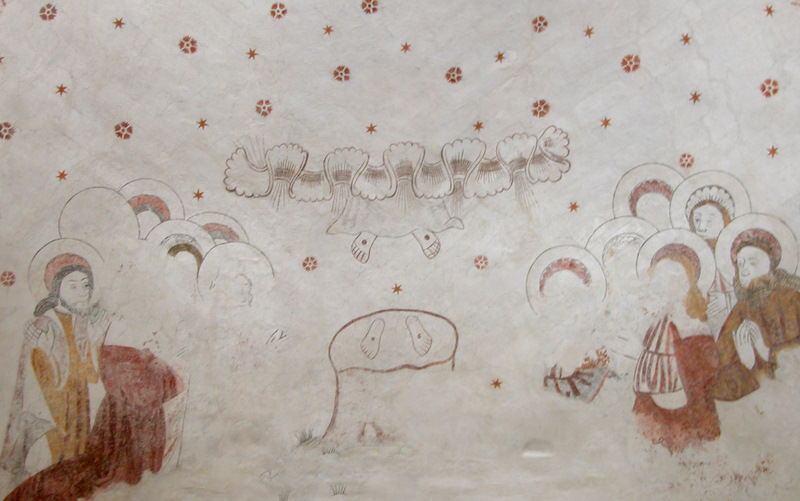
Candle Lighting
We light these candles, still in our own homes and unable to gather and to be fully and wholly present to one another.
Today, may the flickering flames remind us of the deeper truth of our fullness:
The Christ light shines in each of us.
May the light of love shine in our eyes;
May we awaken again today to the wonder of loving and being loved.
Opening Prayer
Come to us, Holy Spirit,
in the quiet times of peace.
Come to us, Holy Spirit,
in the anguished eternities of grief.
Come to us, Holy Spirit,
in welling fountains of joy.
Come to us, Holy Spirit,
in cold vistas of disconnection.
Come to us, Holy Spirit,
in bright sparks of community and trust.
Come to us, Holy Spirit, come!
Music to reflect with
This song offers a witness to the constant faithfulness of God in the midst of upheaval, uncertainty and change, speaks of the fullness of Love and has tones of Psalm 139.
Readings for the week
The reading from Acts and the gospel reading are below
Reflection
Click on the audio clip above to listen to the reflection or read the text below that.
Scroll down to the image from the ceiling of the Sistine Chapel to find the questions for conversation.

The story of the ascension can be challenging for our Western, post-modern ears since we inhabit a culture that values the approach of scientific enquiry and proofs as the way to understand the universe.
Unlike our ancestors in ages before us, we know for sure that heaven is not a physical place above the blue of the sky. But if you are like me, you may have been schooled, as good Christian believers, to accept a world view which vaguely blends the medieval with the modern.
We’re not generally taught to believe in heaven as a physical place but rather a spiritual one. Even so heaven is still about the sky just as our ideas of hell include a sense of below us, and its torments are, interestingly, extremely physical.
Of course there is a broad spectrum of just how far you might believe such things.
Somewhere along this spectrum you might form a world view that accommodates the miraculous aspects of the biblical revelation. For a while there, finding possible logical explanations was a popular way to approach the laws of science bending aspects of the stories. At the far end the scale there is a total rejection of scientific facts and means of enquiry.
If we approach the scriptures as documents intended to explain the way the world works in the same way that scientific processes aim to explain the world, then there are plenty of stories in the bible that are beyond the proofs of observable, measurable or experiential reality.
There are donkeys that talk. Axe heads that rise to the surface when thrown into water. Long hair that is the secret to super strength, the earth pausing in its turn around the sun, water supporting the weight of a human being standing upright and a multitude fed with a miniscule amount of food etc.
The story of the ascension fits nicely into this category of beyond scientific proof stories.
We are given a small window of grace here, though, because the crucified Christ in his resurrection body does not seem to be bound by the limitations of our bodies. What his body truly consists in, though, is uncertain. The risen Christ includes our reality and also transcends our reality. There is mystery and contradiction in his appearing and disappearing inside locked rooms – seeming to be less substance and more spirit – whilst at the same time also still eating and cooking, talking and breathing in a very physically real way. So, how are we to approach this story and find its eternal truth, its nurturing substance for our journey today without having to go fully medieval?
Well, just because this belief in a physical heaven above was a given for the ancients does not make it part and parcel of the Christian faith today. We are not required to take on a pre-enlightenment mind set in order for the good news of God’s love to transform our hearts and minds. Instead this story invites us to see into the very nature of reality itself from a broader – dare I say higher – perspective.
In dwelling with this story, I became more and more aware that if we understand God in heaven as somehow above us, that orients us in a universe of separation. Our imagination does not have to leap to picture God in heaven above – this is a water flowing downhill kind of idea and most of the religious art depicts God as over and above all, accompanied by angels and floating among the clouds. From heaven, God can watch over us, and take notes. If God wants to be more present with us, and visit us then this is done through sending first the Son, and then the Spirit to us.
I know that if we had a conversation about this, you may well say that’s not what you believe…but the imagination doesn’t have to check in with what you believe before it forms an image and then shapes the way you see, feel and respond to God. If the image of God in my deepest imagination is that of a bearded old man floating in the clouds, then I will respond to this image even if in my mind I believe that God is not old or bearded or a man. Once God is seated in heaven above, then it’s another easy slide into seeing us living on earth and unable to have any deeply trusting or intimate relationship with the God who is above.
We must live on earth, distinct and separate from the holiness of God, except for when we have places we can visit – churches – and people who can mediate – priests – who are set apart and allow us a temporary connection. There are strong and clear lines of division in this world view. It’s not just art that forms our image of God – in music too, many hymns and praise songs feature the language of God above (it rhymes so conveniently with love) and as we sing these over and over the words reinforce this idea of a three layered universe. In this world view, life is like a layer cake where we are born into the middle layer and during our lifetime what we believe, and to a certain extent how we live, determines which layer we will spend eternity – upper or lower/ good place or bad place.
It’s really important to name this and see it for what it is, because this orientation of separate layers of reality does not reflect the fullness of the good news of the incarnation.
In Jesus the Christ, God is love poured out into human form. God is with us as us. God fully accepts and completely embraces the material reality of embodiment. Every thing that is made is good – we’ve known this from the creation stories, but we’ve also overlaid that goodness with another story of inherited brokenness and the spoiling of perfection – even though God never looked at creation and said ‘it is perfect’. Very good is as good as it gets, and it is good enough for God to participate in, join with us in, become one with us in.
Just pause for a moment and let that sink in.
This material and physical world in which we live and move and have our being is also the very place where God’s love, life, energy and breath is pouring forth, bursting out, flowing over, inspiring and expiring in a continuous, joyful unfolding. The good news of the gospel simply doesn’t fit with the imagination of separate layers of reality. Through the power of self giving love, God chooses to be with us even in the darkest depths of our utter rejection, our inhuman cruelty and our desperate violence. God chooses to be with us in the breathless emptiness of death so that there is now nothing left to separate us from the love of God. We, and every thing in creation, are lovingly and seamlessly woven into the slow, patient and gracious handiwork of salvation. God is with us working all things together, good and evil, into this one mission – to bring life, healing and wholeness for all creation so that everything is transformed by love, because every thing in the whole universe is already full of God’s life and glory.
And if salvation through transforming love is the shape of the universe, then there can be no up to heaven because heaven is hidden in the ordinary, because the every day is holy, because grace spills over with each breath.
So the disciples see Jesus ascend. Is there any significance to that? Does that offer proof of a heavenly realm above? Well, for what it’s worth, here’s what I think….I think we see what we expect to see.
If I am taught to believe that heaven is up, I will look up for a sign from God. I will lift my eyes when I find myself getting caught up in the emotion of a moving worship song. I will carry a sense of the upness of God’s being and I will use language and resonate with images that reinforce what I already believe to be true. If I believe heaven is up, and that this is where Jesus is finally disappearing to, then I will see what I expect to see, which is ascension.
If I believe heaven is here, that every common bush is afire with the presence of God, that every life reveals and hides the face of God, that every thing is blessed and broken and wholly loved by God then that’s what I will see.
The story of ascension may be an invitation for us today to begin to think about what we expect to see and how that limits what we can see. Of course, no one likes having the limitations of their world view pointed out to them, especially as it may seem threatening to the pattern and order of the world as you know it.
But we are a week away from celebrating the day of Pentecost when we remember the story of the cautious disciples become courageous, transformed by the power of the Holy Spirit. In a series of world shattering encounters, this is just one more time when their limited world view gets shaken until its teeth rattle. Once more they are broken out of the narrow way of what they have been taught and the overflow of breath, light and energy of Divine Life carries them in its flow.
So I wonder what you might see if you were looking for signs of God’s presence and action right here?
I wonder what you might find shifting in the way you think about mission, and where you might notice the transforming work of salvation happening in you, around you and through you.
Perhaps you might notice the sublime act of ascension happening in the hidden chambers of your own heart….
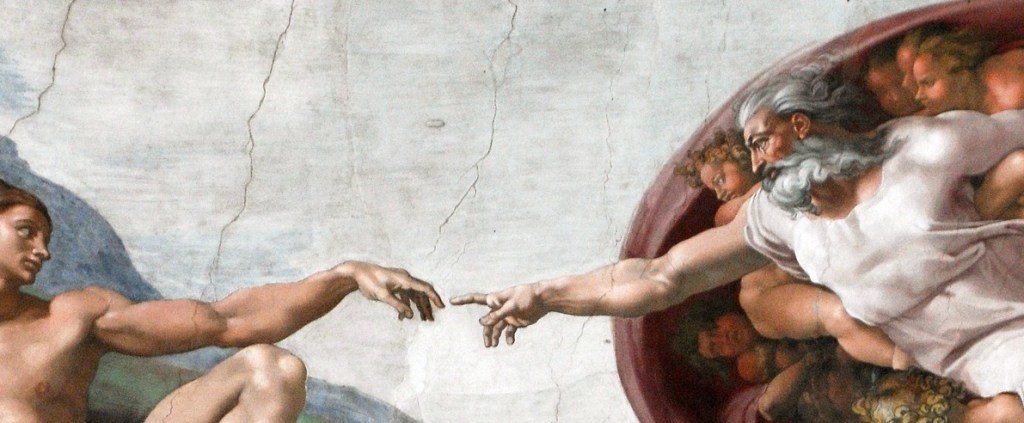
Questions for conversation and reflection
Do you have a story of experiencing a shift in your world view – a moment of seeing things differently or having your perspective changed?
How have you learned to blend faith and science, and how do you feel about that?
What does heaven mean to you?
How would you describe the image of God that you hold?
It might be hard to pick out the true answer from the ‘right’ answer, so it may help to consider this: what is the image of God that I find myself thinking of as I am talking to God in prayer? Who is it I am expecting to meet with? How does God respond to my prayers?
Can you identify some of the songs, pictures and stories that have influenced or shaped this image?
The Lord’s Prayer
O Breathing Life, your Name shines everywhere!
Release a space to plant your Presence here.
Imagine your possibilities now.
Embody your desire in every light and form.
Grow through us this moment’s bread and wisdom.
Untie the knots of failure binding us,
as we release the strands we hold of others’ faults.
Help us not forget our Source,
Yet free us from not being in the Present.
From you arises every Vision,
Power and Song from gathering to gathering.
Amen – May our future actions grow from here!
A re-translation from the Aramaic
Blessing
The love of the faithful Creator,
The peace of the wounded Healer,
The joy of the challenging spirit
The hope of the Three in One
Surround you and encourage you
Today, tonight and forever. AMEN.

