
Candle lighting
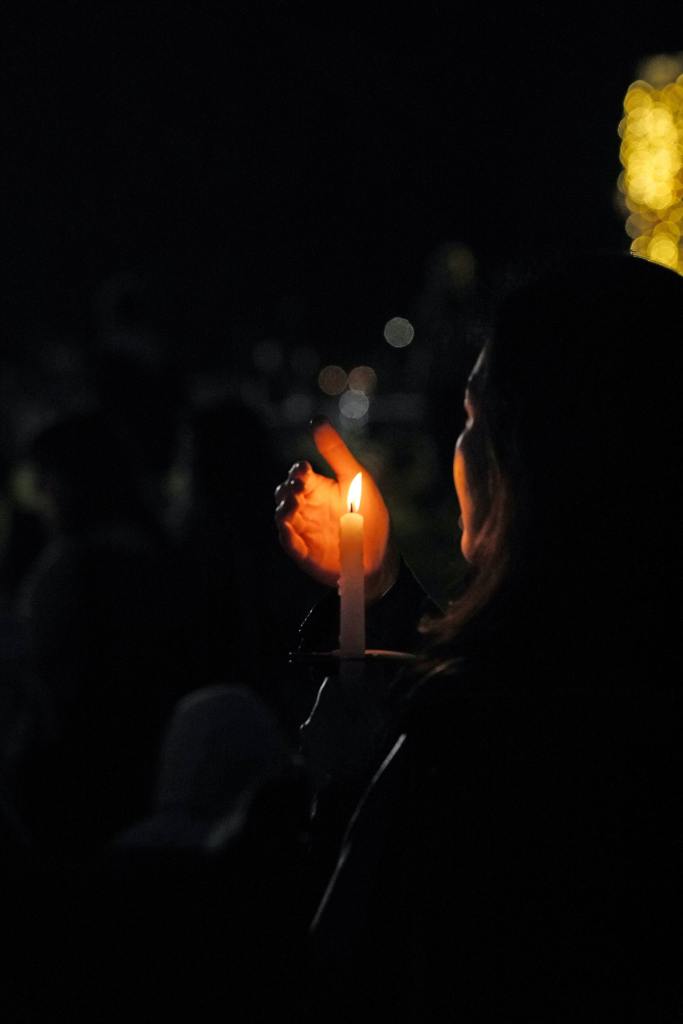
We light this candle now,
remembering how fragile life is –
easily snuffed out like a candle in the wind –
fleeting, its end unknowable.
Help us to value our lives and use our time wisely –
and to your glory.
Opening prayer
Lord, touch our lives with your glory that we may reach out to others.
Fill our hearts with your love that all may see the love of Christ.
Inspire us to dare new things for you that we may encourage those without hope,
Open our lives to your Spirit that we may reflect your praise. AMEN
Let there be singing…
Two songs of doubt and trust – I choose to worship by the Rend Collective and Brooke Fraser’s desert song.
Listen to a story about Thomas called the Twin
Reflections
I’ve gone back and forth over whether to post the reflection for you now, before we meet on Sunday, or to post it later. On the one hand, I’d like you to have to opportunity to join in conversation around doubts and faith, around what we are certain of and what is taken on trust and how all of that works in the way you live and interact with others.
On the other hand, I don’t want my reflections to overshadow yours. I don’t want my questions about faith to seem to have any more importance or relevance than your questions. And most importantly, I want to recognise and honour your faith journey, your questing and questioning, your process and processing. I don’t want to offer my questions and my answers simply so that they can become your questions and your answers.
So you get to choose. You can read the text below or listen to the audio of my reflection before we gather on Sunday, or you can save it for later to add as a post-conversation perspective.
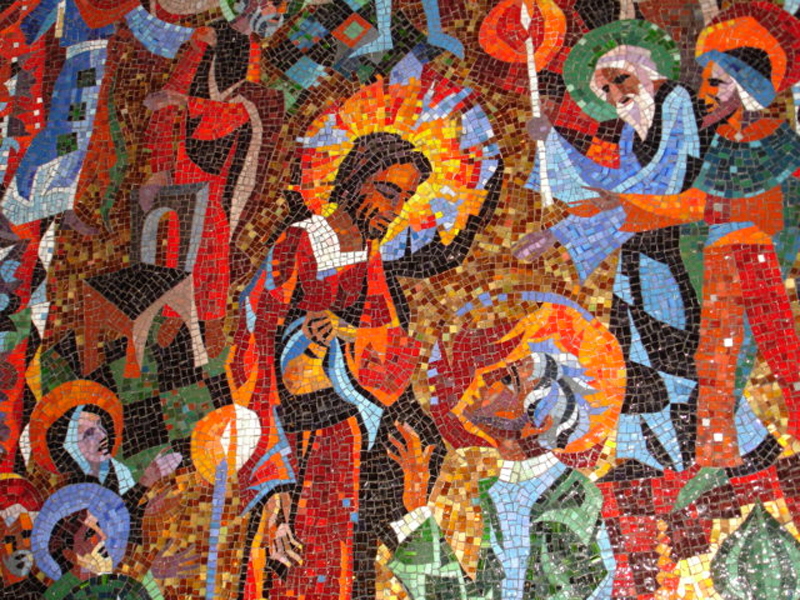
Scroll down to the image of Jesus and Thomas to find some questions to consider and journey with, the prayers of the people and a blessing.
This is the Audio
The text starts here
There are many hymns and songs written with the cross at the centre and celebrating the resurrection. There are less that recognise our doubts and questions, our uncertainties and the process of holding a holy space for these so that we learn to trust in the darkness as well as the light. But I believe that doubts and questions are a vital and necessary part of the journey of life and faith. And so I love that this story is included in John’s account of the gospel. He’s the only gospel writer who tells of Thomas being left out of the original appearance event after the discovery of the empty tomb. The other disciples see Jesus, who greets them with peace and shows them his hands and his side. Thomas returns to the room and Jesus has gone but the disciples tell the story. I bet they did! I bet they told it over and over. Poor Thomas! I wonder how many times he heard the story before he said his famous doubting words – you got to see, he came and showed you. I’d like to see. I need to see and touch. I need to know for myself.
In the context of faith, doubt has almost entirely negative associations. When Jesus does appear again, he tells Thomas ‘believe and do not doubt’. James writes in his letter that the doubter mustn’t expect anything from God. But I want to know…is Thomas really doubting? Or rather, is Thomas expressing a negative kind of doubt? An unhelpful doubt – the kind that leads you away from authentic faith? I don’t think so. I suspect that part of the trouble with expressing doubt is that generally speaking, we do love certainty. Most of us feel safe when we believe we are right – when we locate ourselves in the right group, with the right beliefs and often we feel satisfied and assured because we think that rightness aligns us with Goodness, Truth and Wisdom.
But it is easy to forget that the word ‘faith’ is more about trusting than about belief in a set of statements or about holding a view or taking a stand based on those statements. And it looks to me that some strands of Christianity encourage the stand more than the trust.
Because it takes courage to trust and to accept that you simply cannot fully understand and to accept that a certain level of not knowing is actually part of the deal; it takes courage to embrace mystery as part of faith. If you are courageous though, then you can begin to acknowledge where there are rough edges in your faith. You might find a rough edge where experiences of injury, illness or injustice, of malice, crisis or rejection and the doctrines of faith, of ‘right belief’ or ‘Christian world view’ don’t seem to match up. Often this happens when, as part of normal human growth and development, you find that things you took ‘at face value’ when you first heard or learned about them, now don’t seem to make as much sense. There isn’t a seamless flow between life experience and the things you believe about God and about how things ought to be for a believer.
We all have things that we have believed without question. Like Thomas with his need to see and touch the holes from the nails and the spear we know what we see, hear, touch and feel. We also have things we learned in school – or in the school of life – that we understood were true and we haven’t been given any reason to think they are no longer true. For example, I remember being told that breakfast is the most important meal of the day; that if I skipped breakfast then my metabolism would be sluggish for the entire day, and all my mental functioning impaired. But it’s not true. Extending the overnight fast for a few more hours doesn’t do your body any harm at all – in fact there are health benefits from doing this. This misinformation was due to lack of research and limited understanding of the time, but there are some other things I learned as fact – like dairy foods are the best source of calcium and that animal protein is superior to all other forms – these are actually just the claims of clever marketing campaigns and not based in fact at all.
But I learned them on trust. I trusted they were true not because I had experienced them as true, but because I was told it as fact. The same is true for our faith.
You may not have come to faith as a child, or grown up in a Christian household, but chances are your earliest perception of God, your earliest understanding of the birth, life, teaching, death and resurrection of Jesus the Christ began with fairly broad and simplistic brush strokes that you took on faith. You learned them on trust. These are appropriate for children, and were appropriated for easy evangelism. If you did grow up with Christian parents, Sunday school lessons probably formed the largest part of your early thinking about faith and faithful living. These early experiences with their broad brush strokes easily become foundational: set in stone, often, and it can feel like questioning them will push everything else out of alignment.
And honestly, that is a very real possibility. I believe we are seeing a generational wave of young adults deconstructing the set in stone elements of faith they were given and pushing to see, to touch, to know for themselves a truth that is Truth (capital T).
This is what happens when the mismatch of doctrine and experience becomes too painful – when what we ‘know’ as an idea doesn’t mesh with what we ‘know’ in our life. We find ourselves dwelling in the doubtful spaces.
This may not have happened to you, but you might know someone it has happened to. You might have journeyed with those who will not accept anyone else’s testimony. You might have seen your adult children – children who were part of this congregation 20 or 30 years ago – grow up and reject faith or now say that they find faith hollow and irrelevant. Those of us who have not lived through some phase of doubt may find it hard to understand those who seem to be spending a lot of time there. When two truths like belief and experience become too wide to hold together, we find ourselves dwelling in a doubtful space that does not allow for an easy answer nor does it respond to our increased efforts to believe right and have more faith.
And that is why I love Thomas for pushing so hard to know for himself. He won’t take anyone else’s word for it. He has to be the one to touch, to see, to experience and know the truth of Jesus raised to life. After all, what was Thomas doubting? Who was he doubting? What was he reaching for?
Earlier in John’s telling of the gospel, Jesus describes his relationship with us using a number of ‘I am’ sayings. In one of these he says I am the vine and you are the branches.
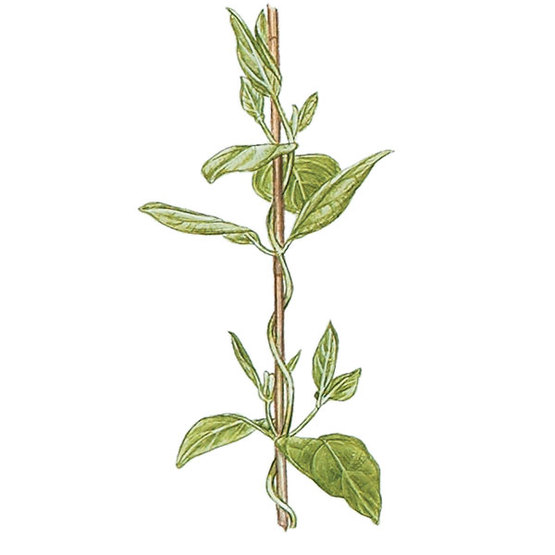
In my garden I have a wall with two climbing plants growing up it, and there is a wire trellis to support them as they grow. One of them is a jasmine, and once it was tall enough to touch the trellis, it simply began twisting itself around the wires, like in this illustration.
As long as it has something to twine around, it will keep on heading upwards along it. But the grape vine that is racing up the other side of the wall has a different climbing technique. It has feelers it sends out with fingers that reach for something – anything – to grab hold of.
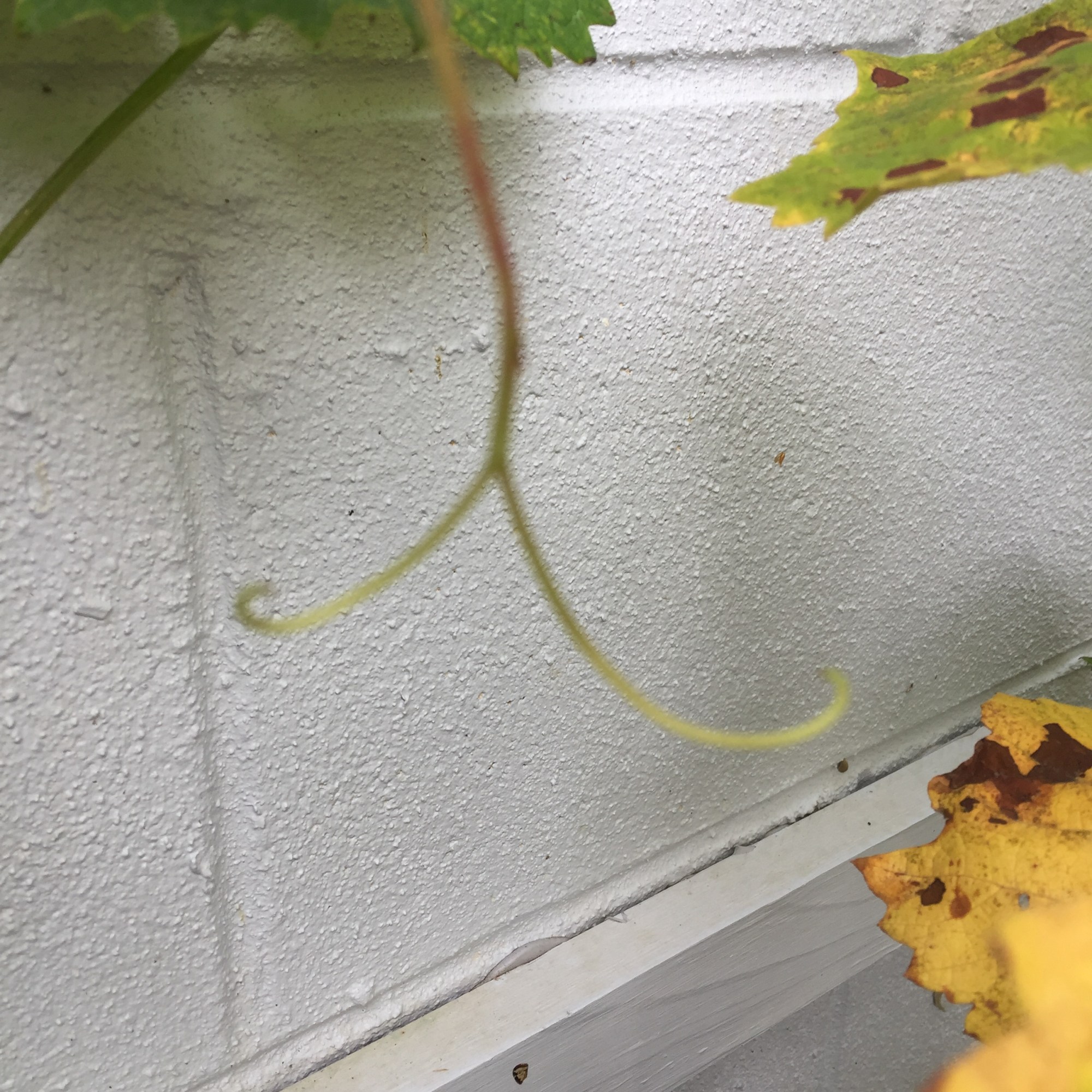
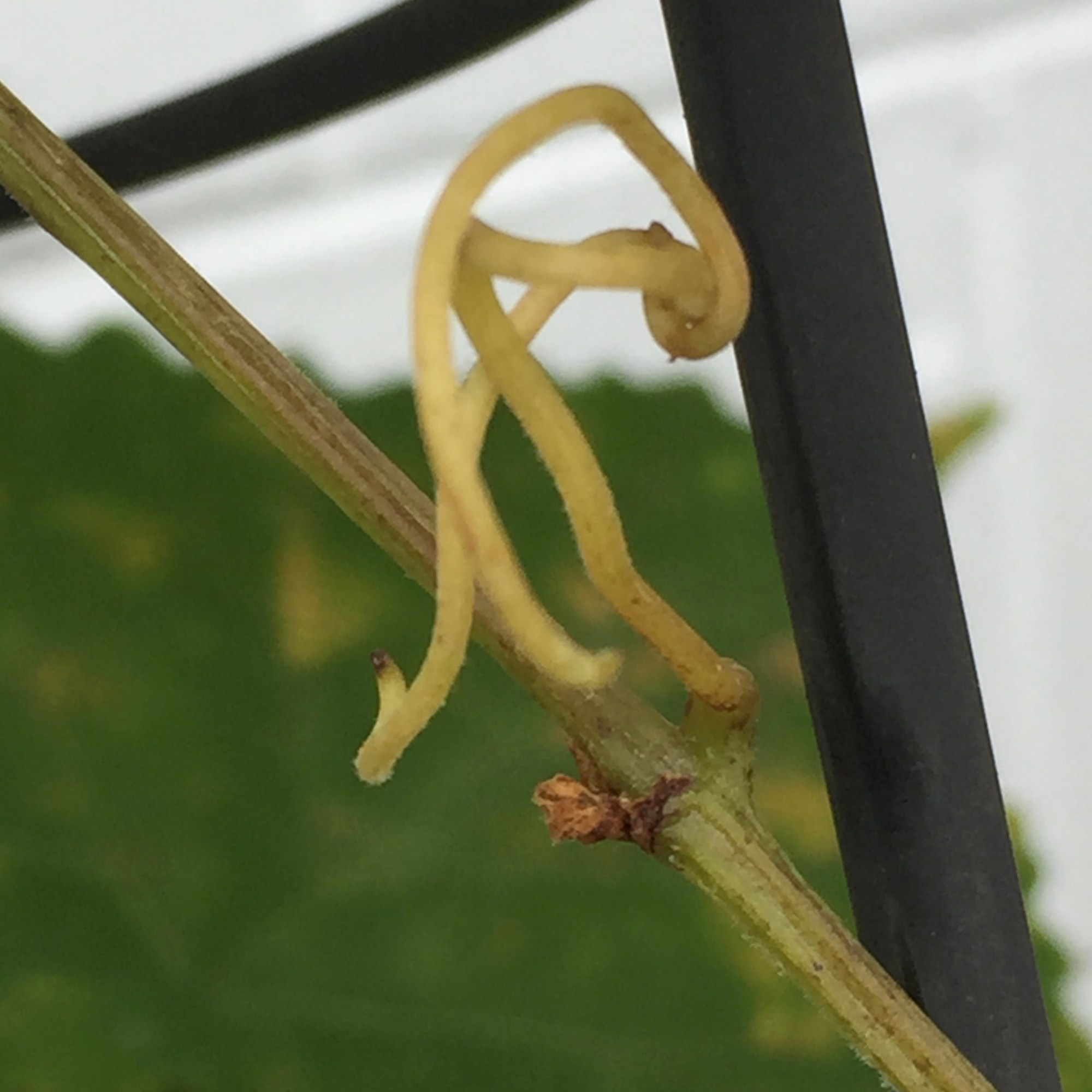
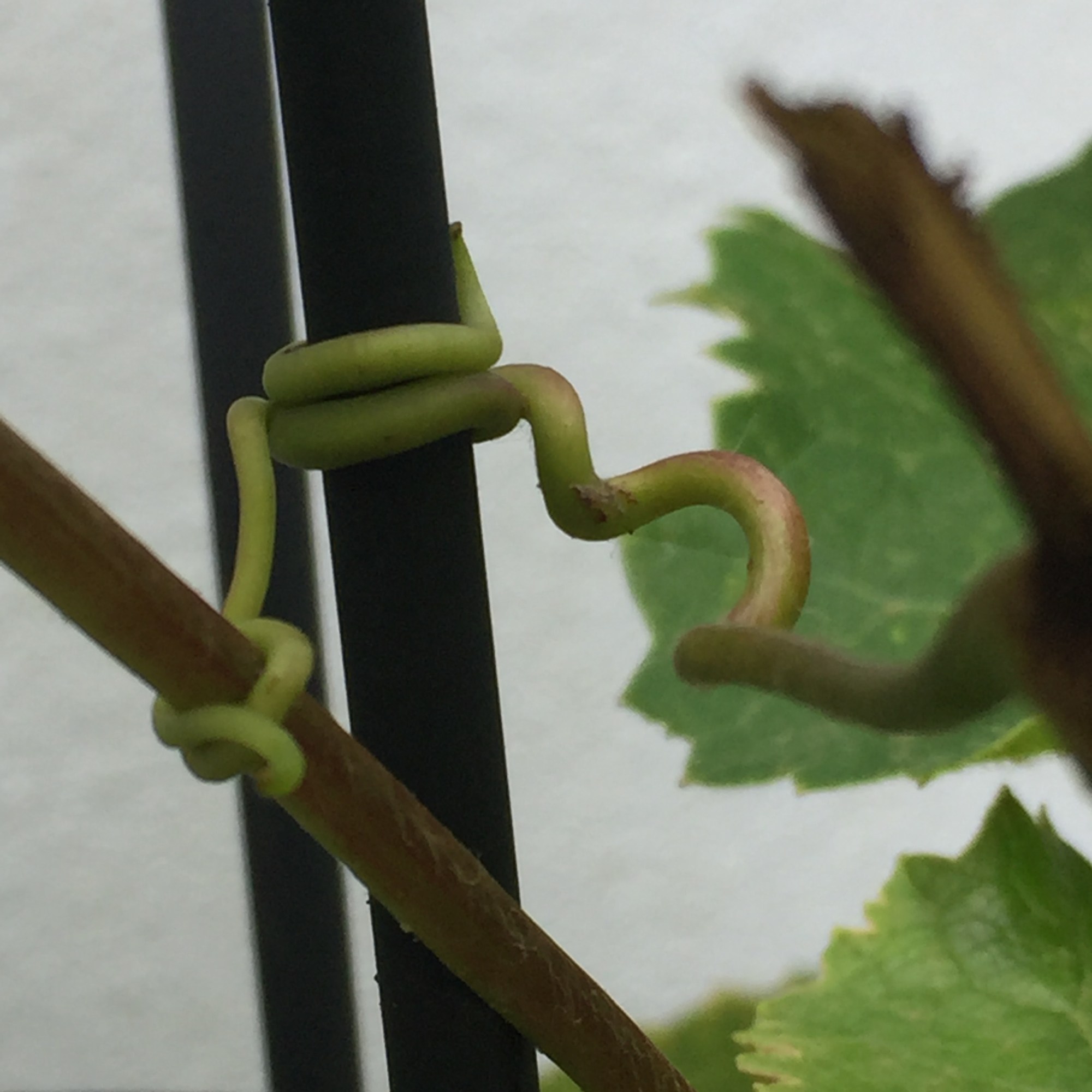
If the plant is lucky, it finds something solid and sturdy that will support it on its way up the wall – like the trellis. But if it can’t find anything, if its fingers don’t touch the trellis, it just curls them up on themselves. And occasionally, its questing tendrils finds a bit of its own lower branches and grabs on to those, which means it ends up being pulled back down rather than growing taller. I think our growing faith can look like that sometimes, especially if we are reluctant to embrace doubt and to trust letting go of certainty so we, too, can reach for authentic, lived Truth.
We can curl in on ourselves. We can fall back on what is beneath or we can reach out for something higher.
Thomas must have suffered through that week between Jesus’ appearances. He must have been beset with questions – why had Jesus come when he was out of the room? Why then? Why had he even been away? What did it mean that he was the one who had missed out? Was there some lesson for him to learn? Had he done something wrong? Was there a sin he ought to confess? Should he be praying differently? Should he claim and proclaim God’s promises, remind God about them?
I tell you what I noticed about Thomas’ doubting: he does not apologise for it. I believe that’s because he has nothing to apologise for.
Conversation starters or for your journal/prayer time/ daily walk…
- How did you come to faith, and are you aware of things you accepted without question at that time?
- What has been your approach to doubt and questioning? Have there been any changes in your attitude over time?
- Are there phases of your faith journey where you have dwelt in doubtful spaces and questioned things that did not make sense to you? What was that like?
- Have you journeyed alongside others who have lived with questions? What have you learned from that? How did you find that experience affected you, your relationship with the other and your faith?
Prayers of the people
Let’s join together to offer our prayers.
God of love, we thank you for your presence with us always, and for your love which surrounds us all…We offer our hearts to you today and all that we hold in them; our fears, our worries, our dreams, and our longings.
We pray that you would send your Holy Spirit on us and touch the deep places of our hearts. God, in your goodness, you hear us and heal us.
God who comforts us, we thank you for the many blessings we so often take for granted…give us grateful hearts and teach us to live generously; help us to remember that everything is a gift from you.
May our hearts be open to those who need us to share with generosity from the fullness you have given…. Those who are homeless, those who are hungry, poor and often overlooked. God, in your goodness, you hear us and heal us.
Suffering God, we thank you for the opportunities to serve you by being your hands and feet in the world… we are most fully ourselves when we give of ourselves.
Remind us again and again of our connectedness to you, to each other and to the world; teach us to think and to act from an awareness of belonging to each other, of shared responsibility and shared humanity. Show us how to serve the good so that we all thrive together. God, in your goodness, you hear us and heal us.
Patient God, we thank you for your faithfulness to us, and your steadfast love that accompanies us through the story of our lives…we pray for all those whose story is full of pain, of war, of oppression or natural disaster, and we especially remember the many situations of suffering around the world because of the pandemic.
God, in your goodness, you hear us and heal us. Amen
Blessing
As you journey through this week,
As you journey through each day and each moment
May your questing heart guide you;
may your searching soul’s questions lead you
through each dark valley and along each bright shore.
May you so seek that you find your way
to the truth that you already know-
that is a given beyond knowing –
that is buried in you and deep in the foundations of creation:
you are beloved;
we are beloved.
So each day, each moment, may you come home to this,
and may your life bear witness to the beloved
in all things.
AMEN


I had never thought of doubt that way, but I have also known that the opposite of doubt is most of the time,not faith, but hypocrisy. Thanks for the message.